

How to remove sludge from a pond without draining it? The method we use
A dark bottom, a thickening layer of silt, accumulating sediment, a filter that clogs more quickly, and sometimes unpleasant odors: these signs indicate established silt. Many people then think the pond must be completely emptied. Yet in most situations, a gradual, well-executed approach can remove the silt without completely draining the pond.
The method we use is based on four consistent steps: mechanically remove the silt with a pond vacuum, support biological reduction with anti-silt bacteria, clean organic deposits and walls, then maintain the balance with maintenance bacteria. This approach preserves the life of the pond while restoring a cleaner bottom and more stable water.
— The four-step method
- Remove visible sediment and silt with a pond vacuum.
- Use anti-silt bacteria to gradually break down the remaining organic matter.
- Treat organic deposits and heavily soiled walls when necessary.
- Then maintain the pond's biological balance with maintenance bacteria.
Why does silt accumulate in a pond?
— The main causes of silt formation
Silt gradually forms from organic matter that falls or develops in the pond: leaves, pollen, fish waste, leftover food, withered plants, and dust. These elements settle on the bottom, particularly in areas with little circulation, and decompose slowly.
Over time, they form a dark, sometimes compact layer that can produce odors and disrupt the pond's balance. Every piece of waste removed before it decomposes helps limit silt formation.
— Silt, organic deposits, biofilm, and algae: don't confuse them
Silt is an old, more compact accumulation of organic matter at the bottom of the pond. Light organic deposits are more recent and often visible on stones, walls, or in areas with little circulation.
Biofilm is a thin natural layer of microorganisms on submerged surfaces. It remains beneficial when it is thin and stable, but can become problematic when it thickens and retains too much waste. Filamentous algae and green water, on the other hand, result from a different imbalance influenced by light, nutrients, and organic load.

Also worth reading
Find out how to distinguish a natural biofilm from a saturated biofilm in our article biofilm in a pond: does it really need to be removed?
READ THE ARTICLE— Why avoid completely emptying the pond
Completely emptying the pond severely disrupts the biological balance: beneficial bacteria, biological media, and part of the pond's living ecosystem are removed or heavily impacted. The fish also experience significant stress, while the pond may restart in an imbalanced state.
A gradual approach combining vacuuming, bacteria, and maintenance generally makes it possible to remove sludge without completely draining the pond. A more extensive intervention, such as partial dredging, may nevertheless be considered if sludge occupies a significant portion of the volume or if the bottom is heavily compacted.
Step 1: mechanically remove sludge with a pond vacuum
— When should you use a pond vacuum?
A pond vacuum is useful when sludge is visible, the bottom is dark, sediment is accumulating, or the filter clogs quickly. It is particularly useful after winter, in autumn, or during seasonal maintenance.
Vacuuming removes settled sludge that bacteria alone would take longer to break down. It is therefore a complementary step to biological treatment, not a replacement.
— How do you use the Pondovac 4 or 5 without draining the water?
The Pondovac 4 and Pondovac 5 allow you to vacuum sludge and sediment in sections without draining the pond. The aim is not to strip the entire bottom in a single intervention, but to gradually remove the thickest pockets of sludge and the most accessible deposits.
- Work in sections to preserve part of the bottom's biological activity.
- Avoid unnecessarily disturbing plant roots and wetland filtration areas.
- Maintain good oxygenation during the process, especially in hot weather.
- Adjust the vacuuming frequency according to the amount of sludge, stocking levels, and organic load.

Oase Pondovac 4
A versatile solution for vacuuming sludge and sediment from medium to large ponds.
VIEW THE PONDOVAC 4
Oase Pondovac 5
A more powerful model, suitable for large ponds and demanding koi ponds.
VIEW THE PONDOVAC 5— After vacuuming: remove the waste and clean the filter
After vacuuming, remove the waste collected in the vacuum's recovery container, then check the pond filter. The goal is to remove excess waste without stripping away useful biological media.
A partially cleaned filter retains its biological role while regaining better flow. Therefore, avoid cleaning all the filter media or all the pond's biological surfaces at the same time.

Also worth reading
Find the essential steps in our guide how to maintain your garden pond after winter.
READ THE ARTICLEStep 2: treat the sludge with Aquipond Bactovase
— What is Bactovase's role?
Aquipond Bactovase is a concentrate of selected bacteria designed to reduce organic matter accumulated at the bottom of the pond. Its role is to support the biological breakdown of sludge and sediment, improve water quality, and limit odors caused by deposits.
Bactovase works gradually over several weeks. It is therefore part of a long-term sludge reduction approach and should not be presented as an instant solution for a heavily compacted bottom.

Also worth reading
Discover our guide Bactovase: naturally remove sludge from your pond.
READ THE ARTICLE— When and how should Bactovase be used?
Bactovase is particularly relevant after partial vacuuming, or when the sludge remains moderate and the goal is to support the gradual reduction of organic matter. Functional filtration and good oxygenation create more favorable conditions for bacterial activity.
- Use the product when the water temperature allows sufficient biological activity.
- Keep filtration and aeration active throughout the treatment period.
- Follow the dosages and frequencies indicated on the product sheet.
- Regularly remove floating debris to limit new organic inputs.

Aquipond Bactovase
Bacteria dedicated to the gradual reduction of sludge and organic deposits accumulated on the bottom.
VIEW BACTOVASE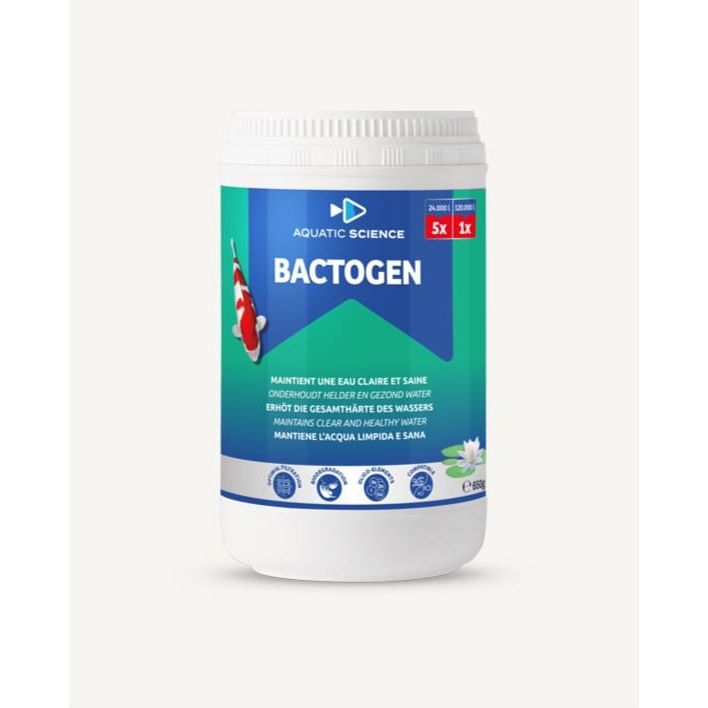
Bactogen
An alternative combining bacteria, enzymes, minerals, and trace elements for biological maintenance.
VIEW BACTOGEN— Bactovase and pond life: fish, plants, and planted filters
When used according to the manufacturer's recommendations, Bactovase can be used in a pond populated with fish, koi, and aquatic plants. It does not require draining and supports a biological approach to maintenance.
However, bacteria do not replace mechanical vacuuming, filtration, or oxygenation. They complement these elements to support more sustainable pond operation.
Step 3: Clean deposits and walls with Aquipond Boost & Clean
— When is Boost & Clean relevant as part of a sludge-control approach?
Aquipond Boost & Clean is useful when organic deposits, a heavy biofilm, or slippery surfaces accompany the sludge. It helps loosen organic deposits on the bottom, stones, and walls, and encourages them to rise so they can be removed.
Boost & Clean complements vacuuming and the action of Bactovase. It does not replace a vacuum for deep or heavily compacted sludge, but acts selectively on deposits, biofilms, and dirty areas.
— How do you use Boost & Clean without draining the water?
Boost & Clean can be used without draining a pond equipped with active filtration and aeration. Before use, check that the water parameters are compatible with biological treatment and that circulation is sufficient to help remove suspended matter.
- Use the product when the water temperature is above 15°C.
- Check the pond's pH, GH, and KH before application.
- Distribute the product evenly according to the recommended dosage of 30 g per m³.
- Keep filtration and aeration active.
- Remove the debris brought to the surface with a fine-mesh net or skimmer.
- Allow at least 15 days between two applications.
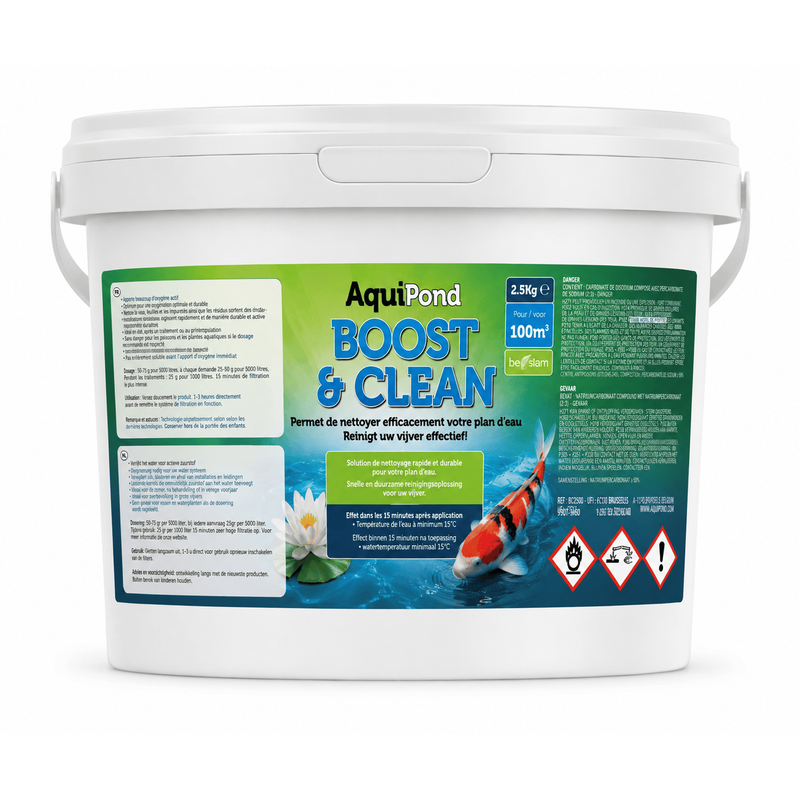
Aquipond Boost & Clean
To help loosen organic deposits on the bottom, stones, walls, and planted filtration areas.
VIEW BOOST & CLEAN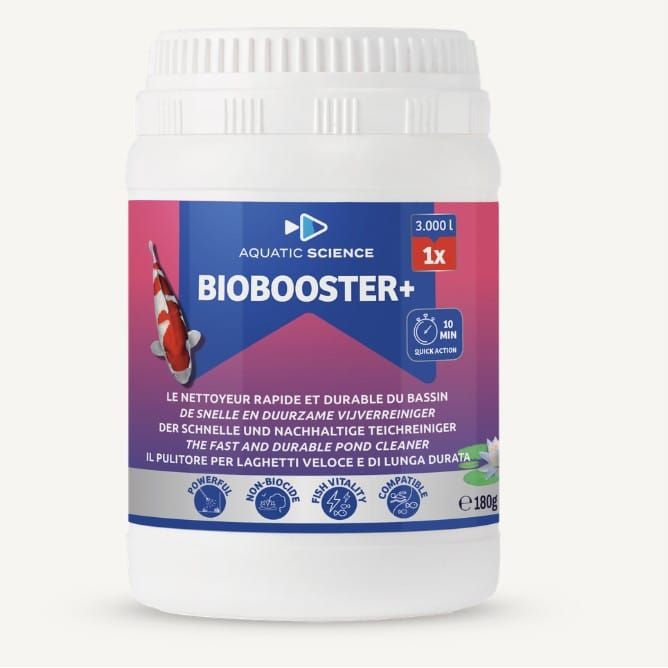
Biobooster+
An alternative for tackling filamentous algae, organic waste, and light sludge.
VIEW BIOBOOSTER+— After treatment: remove what rises
After applying Boost & Clean, some deposits may rise or become suspended. It is important to remove them with a fine-mesh net or skimmer so that they do not settle back on the bottom.
Waste that is removed can no longer feed sludge buildup. This step complements the product's action and limits the reformation of organic deposits.
Step 4: Keep your pond clean with Aquipond Bacto Maintenance
— Why add bacteria after cleaning?
After vacuuming, treating with Bactovase, and cleaning deposits with Boost & Clean, some residual organic matter always remains. Maintenance bacteria help digest this matter and support biological activity in the pond and filter.
They extend the maintenance process without replacing filtration, circulation, or aeration.
— Aquipond Bacto Maintenance: maintenance after treatment
Aquipond Bacto Maintenance is designed to support biological maintenance after cleaning. It can be used after vacuuming, after using Boost & Clean, or for seasonal maintenance, to support the biology of the pond and filter.
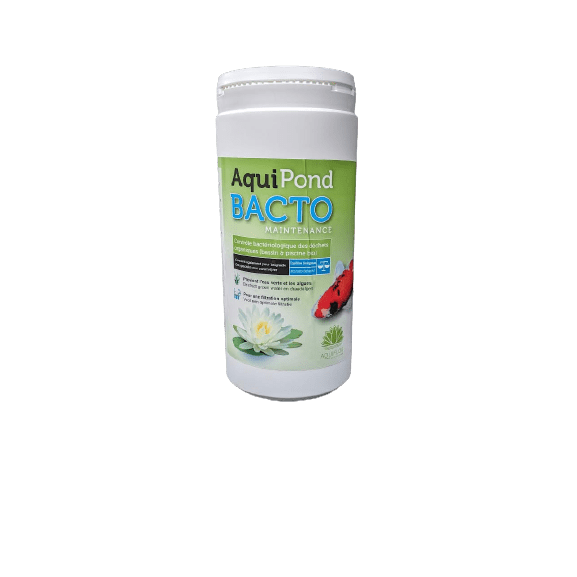
Aquipond Bacto Maintenance
To support bacterial activity after cleaning or during seasonal maintenance.
VIEW BACTO MAINTENANCE— Practices that prevent you from having to empty your pond
Regular maintenance considerably limits sludge buildup. The most effective actions are simple: remove fallen leaves and wilted vegetation, avoid overfeeding the fish, maintain good water circulation, and care for the plants.
- Remove floating waste before it decomposes.
- Control the amount of food given to the fish.
- Maintain the plants and planted filtration areas.
- Check the pump flow rate, circulation, and aeration.
- Test the water regularly to anticipate imbalances.
- Add maintenance bacteria at the right time.
| Dominant problem | Suitable solution | Main objective |
|---|---|---|
| Sludge and sediment at the bottom | Pondovac 4 or Pondovac 5 | Mechanically remove accumulated deposits |
| Established sludge | Aquipond Bactovase | Gradually reduce organic matter |
| Organic deposits, heavy biofilm, slippery walls | Aquipond Boost & Clean | Loosen deposits and help remove them |
| Maintenance after cleaning | Aquipond Bacto Maintenance | Maintain the pond's biological activity |
Frequently asked questions about pond sludge
— Can sludge really be removed without draining the pond?
Yes, in most situations, targeted vacuuming, an appropriate bacterial treatment, and regular maintenance can reduce sludge without completely draining the pond. However, if the sludge is very deep, compacted, or occupies a significant proportion of the volume, partial dredging may become necessary.
— Pondovac, Bactovase, Boost & Clean: in what order should they be used?
Start by vacuuming the visible sludge with a Pondovac. Then add Bactovase to support the biological reduction of the remaining sludge. Use Boost & Clean when organic deposits and heavily soiled walls are present, then continue maintenance with Bacto Maintenance.
— Are these products compatible with koi and plants?
When used according to the manufacturers' recommendations, these products are designed to be part of the maintenance routine for a pond populated with fish and plants. Follow the recommended dosages, maintain good oxygenation, and avoid carrying out too many interventions at the same time.
— How long does it take to see the effects of Bactovase?
Bactovase works progressively, and its effects may become visible over several weeks. Results depend in particular on water temperature, oxygenation, filter operation, the amount of sludge, and the pond's organic load.
A sustainable method for a cleaner pond bottom
A pond can generally be cleaned of sludge without being drained. The most consistent approach is to remove the sediment with a Pondovac vacuum, support the biological reduction of sludge with Bactovase, act on deposits and walls with Boost & Clean, then maintain the balance with Bacto Maintenance.
By addressing each problem with the appropriate solution, the pond remains healthier, more stable, and more enjoyable to observe throughout the seasons.
Leave a comment