


How can I get rid of filamentous algae in a pond?
How to get rid of algae in a lake, basin, or pond? How do I remove algae from my pond?
Filamentous algae are small living organisms belonging to the plant kingdom that live mainly in aquatic or, more precisely, humid environments.
The establishment of these plants in ponds is therefore quite normal. However, their presence is bothersome for several reasons. This is why pond owners are in a constant battle against these algae, even if they are not specifically harmful. Let's discover the conditions in which algae develop, the reasons for limiting them, and effective methods against them.
Discover our solutions for reducing algae in ponds.
What are the ecological conditions favorable to filamentous algae?
Knowing the conditions favorable to the establishment and development of algae allows for limiting their proliferation by depriving them of their preferred environment. They can essentially be distinguished into two categories. First, those related to the climate, and then those concerning nutritional relationships.
Climatic conditions
The climatic conditions prevailing in an ecosystem inevitably determine the animal and plant species likely to be found in that environment. Indeed, a species colonizes an environment due to the presence of climatic factors that are advantageous to it. Regarding filamentous algae, these factors are mainly linked to humidity, temperature, hygrometry, and light.
Temperatures favoring the development of algae are those between 20 and 25°C. These plants multiply there and eventually colonize the environment. To do this more quickly, they also need high humidity and relatively good hygrometry.
Discover our solutions for reducing algae in ponds.
Water is the main growth factor, while wind helps them transport their spores more easily for the progressive colonization of the environment. Finally, like all chlorophyll-containing plants, algae need sunlight to develop. This light provides them with the energy necessary to convert mineral elements into organic substances.
Nutritional conditions
The development of algae in any type of environment might seem surprising regarding their nutrition. They sometimes flourish in environments without large nutrient reserves.
Indeed, algae are pioneer plants, meaning they are plants without high requirements in terms of nutrients. You therefore understand that your pond is a paradise for these organisms because it is teeming with nutrients that can serve for their nutrition.
From plant debris released into the water by aquatic plants to fish waste, as well as minerals present in the water, algae find what they need and flourish there naturally.
Discover our solutions for reducing algae in ponds.
Why limit filamentous algae in the pond?
The impacts of the presence of filamentous algae in your pond are of several kinds. It must be recognized that these consequences are not only negative. Nevertheless, several reasons encourage their removal, or at least the slowing down of their propagation. What are these reasons?
The survival of aquatic fauna
The proliferation of filamentous algae in a pond primarily affects the inhabitants of this ecosystem. Even if their presence benefits the maintenance of food chains and ecological balance, their exponential growth causes the progressive death of the pond's fauna.
Discover our solutions for reducing algae in ponds.
Indeed, filamentous algae are voracious consumers of dioxygen. In large numbers, they therefore gradually exhaust the oxygen reserves of the pond, thus depriving fish of this vital gas. The latter, for lack of oxygen, die one after the other, and if nothing is done, the aquatic fauna will be gradually replaced by algae.
The weakening and poisoning of the ecosystem
The scarcity of oxygen caused by the colonization of filamentous algae also causes the progressive disappearance of aerobic microorganisms in favor of anaerobic ones. This concerns much more the bacteria that ensure the ecological balance of the environment. However, anaerobic bacteria are much more harmful to the ecosystem, whether for fauna or flora.
Furthermore, as the algae biomass has increased, their death leads to the deposit of large quantities of organic matter at the bottom of the pond. But if this were limited only to organic matter, it would be without consequence. Indeed, upon dying, these algae release toxins that accumulate in the tissues of the other organisms in the pond that consume them. The food web is therefore infected, and all the organisms in these chains accumulate them simultaneously through the transfer of matter. The entire ecosystem is poisoned by the released toxins.
How to limit filamentous algae in the pond?
There are several processes for limiting algae in a pond. These processes, which are sometimes complementary, are for the most part natural and have no impact on the life of the pond. They essentially consist of preventing the algae from finding the conditions favorable to their development.
The injection of air currents into the pond
Aerating the pond allows for the introduction of oxygen, thus promoting the development of fauna capable of limiting the proliferation of algae. By feeding on these algae, the animals and bacteria constituting the pond's fauna participate in the gradual decrease of their population and, consequently, in the limitation of their actions.
The introduction of natural microorganisms
Certain microorganisms, such as bacteria, feed on the same nutrients as algae. By adding these bacteria to your pond, you create competition for the algae, which will gradually find themselves short of nutrients and will therefore wither and disappear.
Deprivation of sunlight
If the fish and aquatic plants you have do not specifically require a significant intake of solar energy, you can filter sunlight by using a dye or a cover to deprive the algae of this energy, which is essential to them. In the absence of light, they will not be able to develop in your pond.
The installation of a filtering and collection system
Some devices allow for both water filtration and algae collection. This type of system can be very effective in preventing the establishment of algae in your pond because they cannot even access it.
Discover our solutions for reducing algae in ponds.
They are stopped even before reaching the threshold.
In conclusion, the establishment and proliferation of algae in a pond are linked to the presence of certain favorable climatic factors and the availability of nutrients. Controlling these plants therefore mainly involves eliminating these factors and implementing systems that prevent their establishment.
Les produits conseillés par nos experts
Voir toute la sélection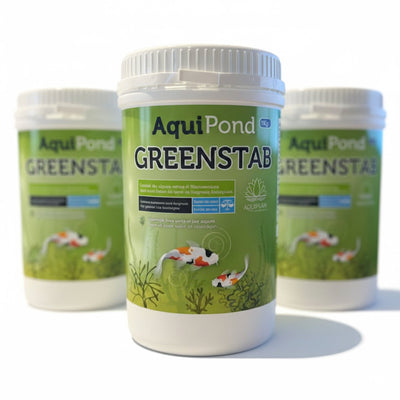 Aquipond Greenstab - Natural treatment against pond algae (even in winter)
À partir de €38,45
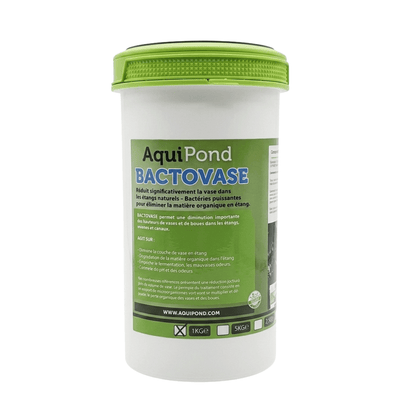 Aquipond Bactovase 1 kg – Bacteria for pond sludge reduction (5 to 10 m²)
€43,95
Voir le produit
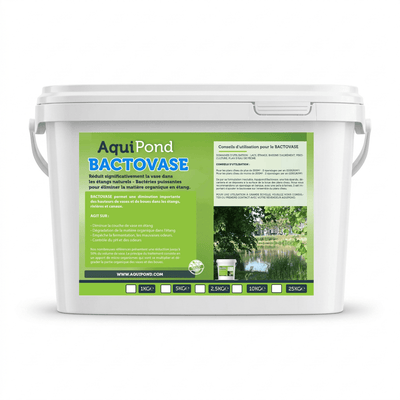 Aquipond Bactovase 2.5 kg – Bacteria to reduce pond sludge (12.5 to 25 m²)
€98,95
Voir le produit
 Aquipond Bactovase 5 kg – Bacteria to reduce pond sludge (25 to 50 m²)
€164,95
Voir le produit
Leave a comment