

How to prevent green water in my pond?
The appearance of green water in a garden pond is a phenomenon as common as it is frustrating. In just a few days, the water can become cloudy, tinted green, and completely hide the beauty of the plants, fish, or decorations you have carefully installed.
This problem is generally due to the proliferation of microscopic algae, favored by an excess of nutrients, light, and an overall biological imbalance in the pond.
Fortunately, there are simple and effective solutions to restore clear and healthy water, provided you act methodically. In this article, we guide you step by step to understand the origin of the problem and apply the right actions.

From monitoring water parameters to maintaining your filtration system, and using appropriate plants and products, discover the best practices for a clear and balanced pond.
Why does water turn green in a pond?
Green water in a pond is a common phenomenon and is generally caused by the proliferation of microscopic algae. These small algae, invisible to the naked eye, multiply rapidly when conditions are favorable. Understanding the root causes of this proliferation is essential to solve the problem sustainably.
Unicellular algae: the main cause
The proliferation of unicellular algae is the main cause of green water. These microscopic algae, often present in small amounts in the water, multiply exponentially when conditions are favorable.
They mainly use nutrients present in the water (such as nitrates and phosphates) to feed and reproduce. Once they reach a certain threshold, the water becomes cloudy, and a green tint appears, obscuring the clarity of the pond.
- Microscopic algae: invisible to the naked eye, they multiply rapidly.
- Favorable conditions: excess light and nutrients (nitrates and phosphates).
- Impact: cloudy and green water, reducing visibility in the pond.
Excess light, nutrients... and a global imbalance
Algae need three key elements to develop: light, water, and nutrients.
Excess light, usually due to prolonged sun exposure, promotes their rapid growth.
Similarly, an excess of nutrients, especially nitrates and phosphates, feeds these algae and accelerates their proliferation. These nutrients can come from several sources, such as overfeeding fish, poor plant maintenance, or poor-quality water from an unfiltered source.
A global biological imbalance in the pond, often caused by an insufficient or unsuitable filtration system, can also create an environment favorable to algae growth. When the pond fails to maintain a balance between the different living elements (plants, fish, microorganisms), algae take advantage to multiply.
- Excess light: prolonged sun exposure or lack of shade.
- Excess nutrients: mainly nitrates and phosphates.
- Sources of nutrients: overfeeding fish, organic debris, unfiltered water.
- Biological imbalance: lack of regulation between plants, fish, and microorganisms.
Common cases: new ponds, organic overload, under-filtration
Certain situations make the appearance of green water more frequent. In a new pond, the biological balance is not yet established, which promotes rapid algae growth. Similarly, an organic overload caused by overfeeding fish or too many fish in a small pond can lead to nutrient buildup.
Finally, an undersized or poorly maintained filtration system is another common cause of green water. An insufficient or faulty filter cannot effectively remove suspended particles or maintain a balanced environment.
- New ponds: lack of biological balance at startup.
- Organic overload: too many fish, excessive food, or debris.
- Under-filtration: improperly sized or defective filter, unable to treat the water effectively.
💡 Did you know?
Did you know that single-celled algae can multiply very quickly in just a few days? That’s why regular preventive pond maintenance, such as cleaning filters and checking water parameters, is essential to keep your pond clear and healthy all year round.
Step 1: Check your water parameters
Maintaining healthy and clear water in your pond requires understanding and controlling water parameters. An imbalance in certain elements, such as KH, GH, and pH, can create an environment conducive to algae proliferation and green water appearance. Fortunately, these parameters can be easily measured and adjusted.

KH, GH, pH: the basic balance to monitor
KH (carbonate hardness), GH (general hardness), and pH are three essential parameters to regularly monitor in your pond. They play a crucial role in water stability, especially for regulating acidity and mineral balance.
- KH (Carbonate Hardness): a KH that is too low can make the pH unstable, causing sudden variations often favorable to algae.
- GH (Total Hardness): GH measures the amount of minerals in the water, and a value that is too low can disrupt the health of plants and fish.
- pH: a pH that is too high or too low can unbalance the entire pond. A slightly acidic or neutral pH is ideal for a healthy pond.
A good balance between these elements is key to avoiding green water and ensuring healthy water for your fish and aquatic plants.
Phosphates and nitrates: the fuel for algae
Phosphates and nitrates are nutrients found in the water, often originating from organic waste such as fish waste, leftover food, or dead leaves. If these levels are too high, they provide an ideal breeding ground for algae.
- Phosphates: they mainly come from uneaten food leftovers and plant decomposition. They promote rapid algae growth.
- Nitrates: often present due to fish and plant decay, nitrates are also an essential element for algae growth.
By reducing phosphate and nitrate levels, you limit the energy available to algae and contribute to a more balanced and clearer pond.
Mineral clay: to clarify water and stabilize minerals
Mineral clay can be a valuable ally in maintaining clear and stable water. Clay, like Biota Earth or Bactoplus Ohmizu Clay, has the ability to absorb impurities and excess minerals in the water, while stabilizing pH and clarifying the water.
- Water clarification: clay captures fine particles and suspended impurities, contributing to clearer water.
- Mineral stabilization: clay helps maintain the right levels of essential minerals for aquatic plants and fish.
🔗 Recommended products: Biota Earth, Bactoplus Ohmizu Clay
Tip: regular water parameter testing allows you to quickly detect any imbalance and intervene before the water turns green. Do not overlook this essential step to keep a healthy pond.
Step 2: adapt and maintain your filtration system
A well-suited and well-maintained filtration system is essential to keep your pond water clear and balanced. Mechanical and biological filtration captures debris and breaks down organic matter while maintaining healthy water for your fish and plants. This step is crucial to prevent algae growth and the appearance of green water.

Mechanical and biological filtration: the right sizing
Effective filtration relies on two types of filtration: mechanical and biological.
- Mechanical filtration: it removes suspended solid particles, such as dead leaves, food waste, and other debris. A properly sized filter should be able to process the entire volume of pond water within a few hours, depending on the pond's size.
- Biological filtration: it breaks down organic matter (fish waste, plant debris, etc.) thanks to the action of beneficial bacteria. A good biological balance helps prevent excessive nutrient buildup, which reduces the risk of algae growth.
It is important to choose a filtration system suitable for the size of your pond and its environment. Too small, it will not be effective, and too large, it could disrupt the pond's ecosystem.
UV lamps: what power and when to change the lamp?
UV lamps are an excellent way to treat green water in your pond. They destroy suspended algae by exposing them to ultraviolet light that disrupts their cellular structure.
- UV lamp power: the choice of power depends on the volume of water in your pond. Generally, a UV lamp of 11 to 36 watts is recommended for ponds ranging from 1000 to 4000 liters. For larger ponds, a more powerful UV lamp is needed.
- When to change the UV lamp? UV lamps have a limited lifespan, usually 6 to 12 months. It is therefore important to replace them regularly to ensure their effectiveness. A sign of UV lamp inefficiency is water becoming cloudy or green, even after some time of use.
Beneficial bacteria: essential allies for clear water
Beneficial bacteria play a crucial role in biological filtration. They help break down organic waste, fish excrement, and other debris, thereby reducing nitrate and phosphate levels, which are primary nutrients for algae.
- Action of bacteria: they transform organic waste into harmless elements for the pond environment, such as minerals and nutrients.
- Benefits: introducing beneficial bacteria into the pond helps keep the water clear by preventing the accumulation of nutrients that promote algae growth.
Adding products like Bactogen can be very useful to maintain a sufficient population of beneficial bacteria.

Did you know that maintaining filtration is one of the most important factors to avoid green water? Regularly clean your filter and check the UV lamp to ensure clear water.
Step 3: Use aquatic plants
Aquatic plants play an essential role in the balance of your pond. They not only enhance the appearance of your aquatic space but also actively help fight algae. By choosing the right plants, you can limit algae growth, maintain appropriate nutrient levels, and provide oxygen to your pond, thus contributing to the health of the entire ecosystem.
Floating and oxygenating plants: competing with algae
Floating and oxygenating plants are valuable allies in the fight against green water. They absorb some of the nutrients (such as nitrates and phosphates) that algae consume, thus reducing their growth. These plants have a direct impact on water quality by:
- Limiting light: floating plants like duckweed or water hyacinth form a plant cover on the surface, reducing the amount of light that penetrates the water. This slows algae photosynthesis and prevents them from multiplying quickly.
- Absorbing nutrients: oxygenating plants, such as myriophyllum or elodea, absorb nitrates and other nutrients in the water, depriving algae of their essential “fuel.”
By diversifying your plantings between floating and oxygenating plants, you provide a sustainable solution for a clear and balanced pond.
Shore plants: fix nutrients, shade the pond
Shore plants are just as important as aquatic plants. They help maintain your pond’s balance by fixing nutrients present in the soil and providing shade, which further reduces algae proliferation. These plants:
- Fix nutrients: the roots of shore plants absorb some of the nutrients from the water and convert them into organic matter, thus reducing the amount of phosphates and nitrates available to algae.
- Provide shade: a well-shaded pond is less conducive to algae growth. Shore plants, such as water irises, reeds, and sedges, create a shaded area around the pond, reducing direct sunlight on the water.
Shore plants also add a natural and aesthetic touch to your pond while contributing to its ecological balance.
Did you know that some aquatic plants, like duckweed, can multiply quickly? Make sure to control them regularly to prevent them from covering too much of your pond’s surface.
Step 4: regularly maintain the pond
Proper maintenance is essential to sustainably prevent the appearance of green water. Even with a good initial balance, external inputs (plant debris, food, fish waste) can quickly disrupt the system. Maintenance should not be seen as a chore but as a beneficial routine for the health of your pond… and its inhabitants.

Suction of sludge and organic waste
Dead leaves, fish waste, and leftover food accumulate at the bottom of the pond and turn into organic sludge. This sludge is a major source of nutrients for algae and promotes their proliferation if not regularly removed.
- Use a pond vacuum like the PondoVac 5 to effectively clean the bottom without draining the water.
- Favor regular maintenance rather than a big occasional cleaning, to avoid disturbing the pond's biological balance.
- Also avoid excessive accumulation of dead or decomposing plants.
Feeding fish: avoid excess
Overfeeding is one of the most common mistakes among pond owners. Some of the uneaten food ends up decomposing in the water, increasing the nutrient load available for algae.
- Feed small amounts of food, adapted to the number and type of fish.
- Observe if all the food is consumed within a few minutes.
- Prefer quality food, like Dynamix Koï, which is better digested by fish and less polluting for the water.
Aeration and water circulation
Stagnant water is an ideal environment for the development of unwanted algae and bacteria. Conversely, good oxygenation promotes gas exchange, supports beneficial bacteria, and stabilizes water parameters.
- Install an air pump or air diffuser, such as the Fujimac Eco 60 or the Hiblow HP 80.
- Make sure the water circulates properly throughout the pond, including in the deepest areas.
- In summer, aeration also helps compensate for the natural drop in oxygen levels in the water.
💡 Did you know?
A simple excess of food or a few decomposing leaves can be enough to unbalance a pond. A well-planned maintenance routine is one of the best ways to prevent green water in the long term.

Treat green water occasionally: clarifying products in case of heavy proliferation
Preventive measures are sometimes not enough, especially after a temperature spike or a massive nutrient influx into the pond. In this case, targeted treatment with clarifying products quickly groups algae and suspended particles to facilitate their removal by the filter or by settling.
Flocculants and clarifiers clump microalgae and water impurities together, causing them to settle or making it easier for the filter to capture them:
- Bactoplus Ohmizu Clay: mineral clay that clarifies water and stabilizes minerals, ideal for natural treatment.
- Aquipond ClearWater (10 m³ and 25 m³): instant flocculant for green water, visible action within hours.
- Colombo Algadrex (500 mL, 1000 mL, 2500 mL): high-performance clarifier, suitable for ponds of various sizes.
- Velda Crystal Clear (500 mL): formulated to quickly gather suspended algae, safe for aquatic wildlife.
- Aquipond Eco AlgControl: natural flocculant made from barley straw, chemical-free, preventive and curative.
- Tetra Pond Algorem: green water treatment, contains a mix of microorganisms and plant extracts.
Bactoplus Ohmizu Clay: clarifies water and improves mineral quality

Bactoplus Ohmizu Clay 2.5L
Ultra-fine Japanese mineral clay, ideal for clarifying water, fixing nutrients, and supporting pond mineralization.
VIEW PRODUCT
Derived from Japanese volcanic clays, Bactoplus Ohmizu Clay is a highly effective natural solution to make pond water clearer while stabilizing essential minerals. It helps fix micro-particles responsible for green water and supports the overall pond balance.
Main advantages:
- Clarifies water by binding suspended particles
- Improves GH and stabilizes pH
- Preventive and curative effect against green algae
- 100% natural product, safe for fish and plants
Aquipond ClearWater: instant clarifier against green water

Aquipond ClearWater 25M³
Instant flocculant specially designed to fight green water. Clarifies water quickly without disturbing the pond's biological balance.
VIEW PRODUCT
In case of heavy suspended algae growth, Aquipond ClearWater acts quickly to restore water clarity. Thanks to its flocculant formula, it gathers microalgae and fine particles, which are then trapped by filtration or settle at the bottom of the pond.
Main advantages:
- Clarifies water in just a few hours
- Easy to use, fast visible action
- Ideal after a temperature rise or pond imbalance
- Safe for fish, plants, and microorganisms
Colombo Algadrex: powerful clarifier for all types of ponds

Algadrex Colombo 2500ML – Green water pond treatment
High-performance clarifier, ideal for ponds up to 25,000 L. Quickly removes suspended algae without harming the ecosystem.
VIEW PRODUCT
Colombo Algadrex is a highly effective flocculant to fight green water, acting quickly on suspended algae. It is designed to clarify pond water in a targeted way, safe for fish and aquatic plants. Available in several sizes (500 mL, 1000 mL, 2500 mL), it adapts to your pond size and the intensity of algal growth.
Algadrex causes the clumping of microscopic particles and single-celled algae, allowing their removal by the filter or natural settling.
Key points:
- Suitable for ponds up to 25,000 L (depending on size)
- Quickly clarifies cloudy or green water
- Visible action within a few hours
- Safe for fish and plants
- Available in: 500 mL (5,000 L), 1000 mL (10,000 L), 2500 mL (25,000 L)
Velda Crystal Clear: a gentle treatment for clear water
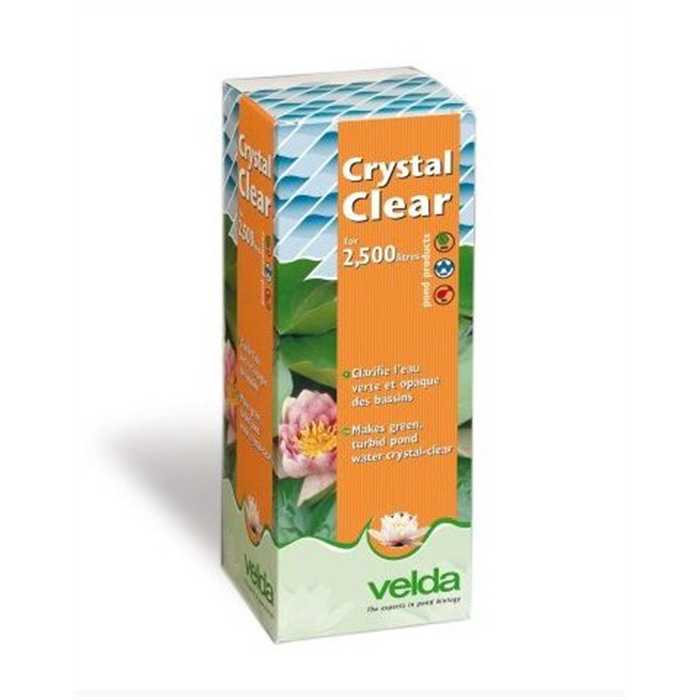
Velda Crystal Clear 500 mL – Green water clarifier
Gentle and effective flocculant for clear water. Ideal for clarifying without disturbing the pond's biological balance.
VIEW PRODUCT
Crystal Clear by Velda is a flocculant specially formulated to clarify green water without disturbing the pond's biological balance. Its action is gentle but effective: suspended algae are grouped together, allowing the filter to remove them more easily.
This product is ideal for small to medium ponds, or as a supplementary solution after UV treatment or a temporary imbalance. It acts quickly without altering water quality or affecting aquatic life.
Key points:
- Gentle clarifier suitable for all types of ponds
- Fast action, visible results within 24 hours
- Safe for fish and plants
- Compatible with UV systems and biological filters
- 500 mL size for about 10,000 L
Aquipond Eco AlgControl: the natural barley straw anti-algae
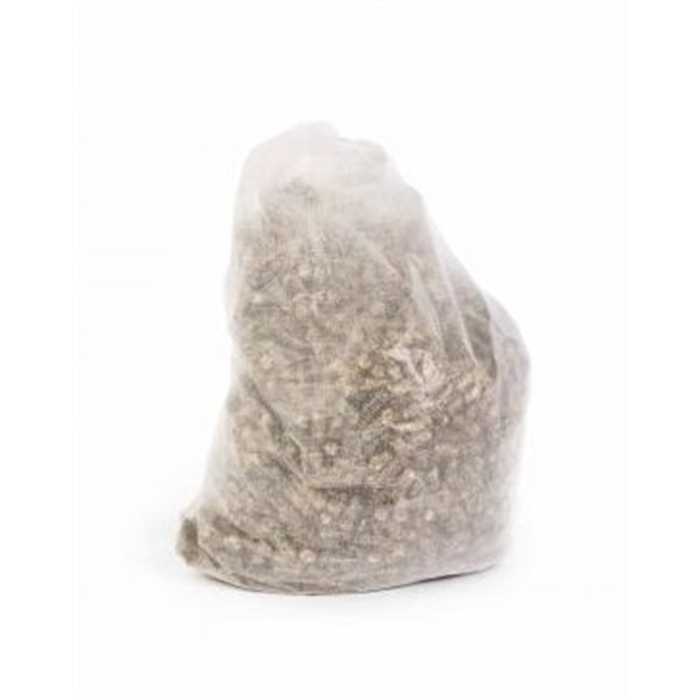
Pack of 10 Aquipond Eco AlgControl - 10kg (max 50M³)
Natural solution against green water based on barley straw. Ideal for small ponds up to 5 m³.
VIEW PRODUCT
Barley straw is an old but still effective solution to prevent and reduce green algae proliferation in a pond. The Eco AlgControl product by Aquipond uses this 100% natural method to gently treat green water without chemicals.
Placed directly in the pond or filter compartment, barley straw gradually releases active substances that limit the growth of unicellular algae. Its action is slow but ideal as a complement to good ecosystem management.
Key points:
- Natural product made from barley straw
- Preventive and curative against algae
- Safe for fish, plants, and filter bacteria
- Acts gradually over several weeks
- 1 kg size suitable for ponds up to 5 m³
Tetra Pond Algorem: a fast and safe clarifier

Tetra Pond Algorem 500 ml – Green water treatment
Fast clarifier against floating algae. Gentle copper-free formula, suitable for all types of ponds.
VIEW PRODUCT
Tetra Pond Algorem is an effective solution to eliminate floating green algae (green water) by forming flakes that are easy to filter. It works within a few hours without harming pond life, making it a good emergency product after a sudden bloom.
Its formula combines plant-based flocculants with specific microorganisms for both physical and biological action. It contains no copper, making it compatible with planted ponds and sensitive biological systems.
Key points:
- Quickly eliminates floating algae (green water)
- Contains no copper or toxic substances
- Visible effect within 24 hours under optimal conditions
- Safe for fish, plants, and filter bacteria
- Available in several sizes, depending on the pond volume
💡 Key points
Pond clarifiers are effective short-term solutions to be used wisely. They do not replace good biological balance management but can help you out of an urgent situation.Once the water is clear again, resume proper maintenance, filtration, and parameter checks to prevent the problem from returning.
Not sure? Send us some photos of your pond. We will be happy to guide you to achieve clear and transparent water!
Comments
Leave a comment