

Which pond vacuum cleaner to choose? Complete guide for a clean and healthy pond
A pond is a true living ecosystem that changes with the seasons. Over time, dead leaves, sludge, and algae accumulate at the bottom, making the water cloudy and unbalanced. If these deposits are not treated, they can harm fish health, promote unwanted algae growth, and spoil the appearance of your pond.
To avoid these problems, the pond vacuum is an indispensable tool. It allows for effective and deep cleaning without having to fully drain your pond.
In this guide, we explain why maintenance is essential, how a vacuum works, and especially how to choose the model best suited to your needs.

Why clean your pond with a vacuum?
Regular pond maintenance is essential to ensure the health of its ecosystem and preserve its natural beauty. Without proper cleaning, organic waste like dead leaves, sludge, or algae accumulates over time, disturbing the overall water balance. The pond vacuum proves to be the ideal ally for effective action without having to completely drain your pond.
— Preserve biological balance
A pond is a living environment that must remain in harmony to thrive.
- Prevent the buildup of sludge and organic debris: these materials release harmful substances as they decompose, disrupting the water balance.
- Limit the growth of algae and undesirable bacteria, which cause green water or bad odors.
- Ensure good oxygenation for fish and plants, preventing deposits from suffocating the pond bottom.
Regular cleaning promotes the health of the entire ecosystem and reduces the need for chemical treatments.
— Improve water quality
Clean water is essential, not only for aesthetics but also for the well-being of aquatic wildlife.
- Clear and pleasant water to observe, highlighting fish and plants.
- Reduction of bad odors, often caused by the decomposition of organic matter.
- Improved health for fish, which live in stable and balanced water.
By maintaining good water quality, you prevent diseases and stress for your fish.
— Time and efficiency savings
Unlike manual methods, the pond vacuum offers quick and deep cleaning.
- No need to completely drain the pond, which limits disturbances for the fish.
- Significant time savings, especially for medium to large ponds.
- Reduced effort, thanks to ergonomic and powerful devices.
How does a pond vacuum work?
A pond vacuum is designed to easily remove waste present at the bottom and on the walls of the pond.
Its principle is simple: vacuum, store, discharge.
- Suction: the device vacuums sludge, leaves, algae, and organic debris using a nozzle and suction hose.
- Storage: dirt is directed to a tank where water and waste are temporarily held.
- Discharge: filtered water is discharged outside the pond, while solid waste remains in the tank or is discharged through a dedicated hose.

There are several types of models, each suited to specific needs:
- Single tank ▸ Works in cycles: vacuum → stop → empty → resume.
- Double tank ▸ Allows continuous work, as one tank vacuums while the other empties.
- With built-in pump ▸ Ideal for large ponds, it offers enhanced suction power and direct waste discharge over long distances.
💡 Tip: for optimal cleaning, choose a model suited to the size of your pond and the volume of sludge to remove.
Different types of vacuums
The choice of vacuum mainly depends on the size of your pond, the type of debris to remove, and the frequency of maintenance. Each model has specific advantages and meets different needs, from occasional cleaning of a small decorative pond to regular maintenance of a large pond or natural swimming pool.
— Vacuum for small ponds or decorative ponds
These vacuums are lightweight and easy to handle, ideal for occasional maintenance. They allow you to vacuum sludge and leaves with ease, without much effort.
Recommended model:
-
Pontec PondoMatic V4 – Excellent for small decorative ponds and occasional cleanings.
▸View product
— Vacuum cleaner with continuous suction
Continuous suction models offer uninterrupted cleaning, thanks to a double tank system or optimized timing. They are perfectly suited for medium to large ponds and allow quick treatment of larger volumes of sludge or debris.
Recommended models:
-
Oase Pondovac 4 – Very versatile for ponds and pools.
▸View product -
Oase Pondovac 5 – More powerful, for very cluttered ponds.
▸View product
— Vacuum cleaner with discharge pump
These vacuum cleaners allow the sucked water to be discharged directly into a specific area, such as a garden or plant bed. It is a practical solution to reuse the sludge and nutrients contained in the water. These models are often used for ponds containing sensitive fish, such as koi carp.
Recommended model:
-
Aquaforte Vacuum Cleaner XL – Eco-friendly vacuum cleaner for pond and pool with direct discharge.
▸View product
— Professional vacuum cleaner or high power
Designed for very large or heavily soiled ponds, these vacuum cleaners offer maximum power and intensive cleaning. They are intended for frequent or professional use and are suitable for large ponds or natural pools.
Recommended models:
-
Oase Pondovac Premium Professionnel – High-end for very large ponds.
▸View product -
Pondtechnics Pond Cleaner 1200 DIBO – Powerful and robust for large volumes.
▸View product
— Comparison of vacuums by type and use
| Type of vacuum | Advantages | Limitations | Ideal for | Average price (*) |
|---|---|---|---|---|
| Manual vacuum | Compact, affordable price, easy to handle | Physical effort required, longer cleaning | Small ponds (<10 m³) | €100 – €150 |
|
Vacuum with timer (e.g., PondoMatic) |
Easy to use, automatic tank, good value for money | Cycle interruption during emptying | Small to medium ponds (10-30 m³) | €150 – €300 |
|
Continuous vacuum (e.g., Pondovac 4 & 5) |
Continuous suction, effective on large debris | Heavier, requires good evacuation flow | Medium to large ponds (30-80 m³) | €400 – €900 |
| Vacuum with discharge pump | Discharges cleaned water directly, saving time | More technical installation | Ponds with sensitive fish (e.g., koi carp) | €800 – €1 200 |
| Professional vacuum | Maximum power, ideal for intensive cleaning | High price, intended for professionals or very large ponds | Ponds >100 m³, natural pools, professional use | > €2,000 |
- Reference price - September 2025

Criteria for choosing the right vacuum
Choosing the right vacuum for your pond is not just about comparing prices or power. Several factors influence user comfort and cleaning efficiency.
Here are the main criteria to consider:
— Size and depth of the pond
The vacuum's power should be adapted to the volume and depth of your pond. For a small decorative pond, a lightweight manual model may suffice. However, for a large pond or natural swimming pool, opt for a vacuum with continuous suction or a professional model capable of handling large volumes and heavier debris.
— Type of debris
The type of debris present in your pond influences the choice of model:
- Fine silt and sand: vacuums with automatic tank or timer.
- Dead leaves and branches: vacuums with continuous suction or with discharge pump.
- Stones or heavy debris: professional models, more powerful, designed for heavily soiled ponds.
— Ease of handling
A well-designed vacuum makes cleaning easier and reduces fatigue:
- Weight: a device that is too heavy can become tiring to use during long sessions.
- Ergonomics: handles, tank positioning, and flexible hose.
- Hose length: to reach all areas of the pond without constantly moving the vacuum.
— Budget and Usage Frequency
Price is not the only factor: consider maintenance frequency. For occasional use, an affordable and simple model is sufficient. For regular or intensive maintenance, investing in a more powerful and durable model will be more cost-effective in the long run.
— Our 3 Key Models
| Model | Ideal for | Key Features | Average price (*) |
|---|---|---|---|
| PondoMatic V4 | Small to medium ponds (10-30 m³) | Automatic tank, easy to use | €150 – €300 |
| Pondovac 4 | Medium to large ponds (30-80 m³) | Continuous suction, effective on large debris | €400 – €900 |
| Pondovac 5 | Large and sensitive ponds (koi carp) | Suction + discharge pump, continuous operation | €800 – €1 200 |
* Reference price - September 2025
Our selection of pond vacuums
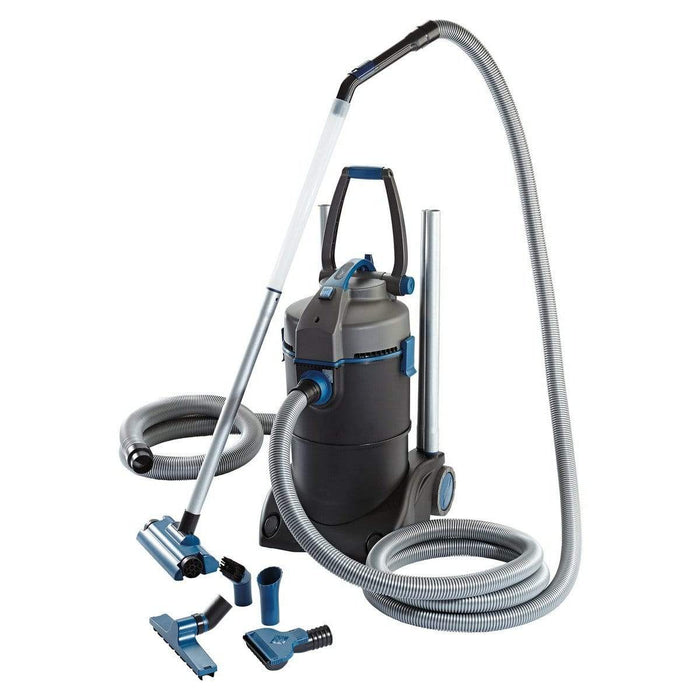
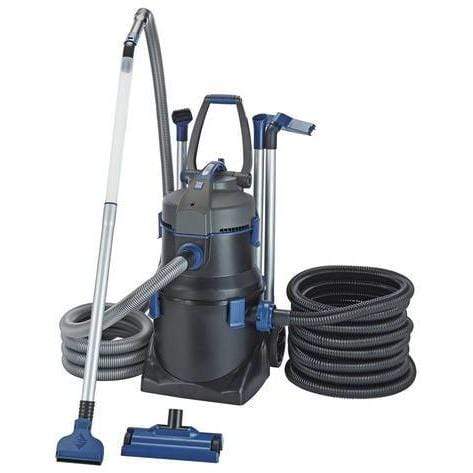
Choose the vacuum suited to the size and needs of your pond for optimal and effective maintenance.
See the full collection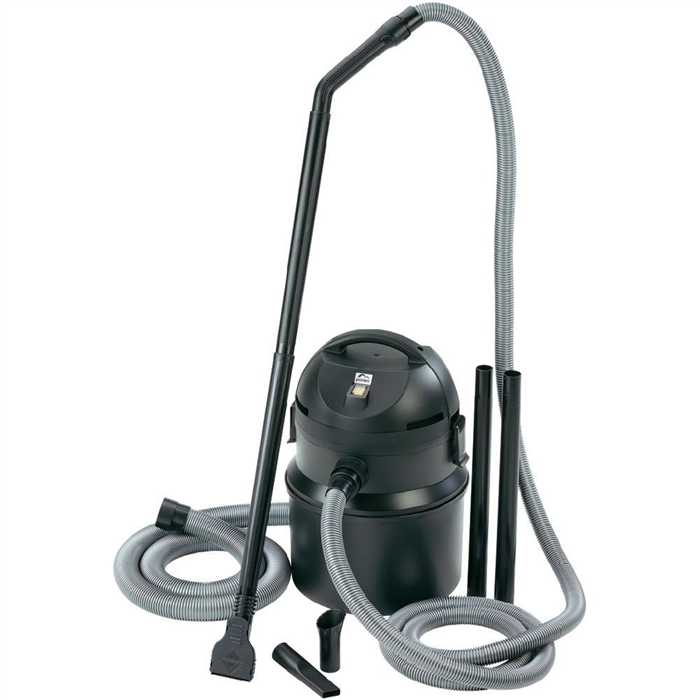
Usage and Maintenance Tips
A pond vacuum is an excellent tool, but to keep it effective and not disrupt your pond’s balance, it is essential to follow some usage and maintenance tips.
— When to Clean Your Pond
- Autumn: take advantage of this period to do a thorough cleaning before winter. Removing dead leaves and accumulated sludge prevents them from decomposing and polluting the water.
- Start of the season: after winter, a light cleaning removes debris deposited during the cold period and prepares for a good start to the season.
- During the year: perform occasional maintenance depending on the condition of your pond’s bottom. The goal is to prevent excessive accumulation of sludge and debris.
— Best Practices
- Suction gently: move slowly to avoid stressing the fish or stirring up too much sediment.
- Partially remove the sludge: it is not necessary to remove it all each time. Only a portion helps preserve the biological balance of the pond.
- Reuse the sludge as fertilizer: the water suctioned containing sludge can be discharged at the base of plants, providing natural nutrients.
— Device Maintenance
- Rinse after use: the tank, hoses, and nozzles should be rinsed with clear water to avoid clogging and extend the vacuum's lifespan.
- Check filters and sponges: clean or replace if necessary to ensure optimal suction.
- Storage: keep the device in a dry place, protected from frost and humidity, to prevent corrosion and electrical damage.
Frequently Asked Questions
— Should you completely drain your pond to clean it?
No, it is generally not necessary to completely drain the pond. The vacuum allows deep cleaning without removing all the water, which preserves the biological balance and limits stress for the fish. Partial draining may be enough, especially to remove sludge and accumulated debris.
— Can a standard vacuum cleaner be used for a pond?
A standard household vacuum cleaner is not suitable: it cannot handle water and may be damaged quickly. Pond vacuums are specially designed to vacuum water and debris, with secure tank and drainage systems.
— What is the ideal cleaning frequency?
The frequency depends on the size of the pond, the amount of debris, and the type of fish:
- Autumn: thorough cleaning before winter.
- Start of season: removal of debris accumulated during winter.
- During the year: occasional maintenance if necessary.
Regularly observing the bottom allows you to intervene at the right time and maintain clear water.
— What to do if the water becomes cloudy after vacuuming?
It is normal for the water to become slightly cloudy after cleaning, especially if the sludge is fine. This stabilizes within a few hours thanks to filtration and natural settling. To speed up clarity, you can add filtering aquatic plants or check that the filter is working properly.
Conclusion
The pond vacuum cleaner is an essential tool to maintain the cleanliness and health of your pond. It effectively removes sludge, leaves, and other debris while preserving the biological balance and the well-being of your fish.
The choice of model depends on several criteria: the size and depth of the pond, the type of debris, the maintenance frequency, and your budget. Options exist for all needs, from small decorative ponds to large natural ponds or pools.
To make your life easier and optimize the maintenance of your pond, discover our selection of efficient vacuum cleaners.
Leave a comment