


Is pond sludge a good fertilizer? Yes, under three conditions (and how to use it in the garden)
When you clean out a pond, you end up with entire buckets of black, foul-smelling sludge. Should you throw it away? Not necessarily. Pond silt is the accumulation of everything the pond has received over the years: leaves, plant debris, fish excrement, uneaten food. In other words, it is a concentrate of organic matter and nutrients. That is precisely what feeds algae in the pond and can feed your plants in the garden.
— The short answer
Yes, pond silt is an interesting organic soil amendment, rich in nitrogen and phosphorus. Three conditions: let it air out and dry for several weeks before use (when fresh, it causes suffocation), add it to compost or spread it in a thin layer, and do not use it if the pond has received chemical treatments, large amounts of salt, or runoff from a road. It should also be avoided on vegetables eaten raw if the pond contains fish.

What pond silt contains
| Component | Origin | Benefit or risk in the garden |
|---|---|---|
| Organic matter | Leaves, plants, excrement | Improves soil structure |
| Nitrogen | Excrement, decomposition | Stimulates growth |
| Phosphorus | Food, tap water, sediment | Promotes roots and flowering |
| Reduced compounds (sulfides, ammonia) | Decomposition without oxygen | Toxic to roots until the silt has been aerated |
| Potential contaminants | Treatments, road runoff | Avoid in the vegetable garden |
Why it should never be used fresh
At the bottom of a pond, silt decomposes without oxygen. That is what gives it its black color and rotten-egg smell, caused by hydrogen sulfide. Spread fresh in a thick layer at the base of plants, it suffocates the roots and can burn them. It must first be given time to oxidize: leave it in the open air for a few weeks in a thin layer, turning it from time to time. Once it has lost its smell and taken on a brown tint, it is ready.
The method, step by step
- Collect the sludge with a pond vacuum or pond net, without emptying the pond.
- Let it drain for a few days in a perforated container, a geotextile bag, or on a sloping tarp, making sure the water does not flow back into the pond.
- Spread it in a thin layer so that it dries and aerates, for several weeks.
- Mix it into compost, alternating it with dry materials (leaves, shredded plant matter), or incorporate it directly into the soil in autumn on a resting plot.
Pondovac 3 - Oase
Pond vacuum for removing sludge from the bottom and recovering it for use in the garden. Live pricing and immediate add to cart:
Uses in the garden
- In compost: this is the safest use. Sludge speeds up composting thanks to its nitrogen content.
- At the base of shrubs and flower beds: in a thin layer, once dry and aerated.
- In the vegetable garden: preferably after composting, on nutrient-hungry crops (squash, cabbages, tomatoes), and not on leafy vegetables eaten raw if the pond contains fish.
- As potting soil for marginal plants: mixed with soil, it is suitable for plants from wet environments planted outside the pond.
When not to use it
Do not use it in the vegetable garden if the pond has received metal-based or chemical treatments, if it has been heavily salted, or if it receives runoff from a road or parking lot, which loads the sediment with hydrocarbons and metals. In these cases, it is better to dispose of it as green waste or according to your municipality's guidelines.
And in the pond: less sludge, fewer algae
Every bucket of sludge removed is an amount of nitrogen and phosphorus that will no longer feed algae. Between clean-outs, specialized bacteria help break down organic debris and limit its accumulation, while a pond net removes leaves before they sink.
Aquipond Bactovase Liquid 1 L
Bacteria that break down sludge between clean-outs: less debris, fewer nutrients for algae. Live pricing and immediate add to cart:
Large pond net 140 cm
To remove leaves and debris before they turn into sludge. Live pricing and immediate add to cart:
Large volumes: consider professional dredging
For a large pond with several dozen centimeters of sediment, a garden vacuum is no longer sufficient. Professional vacuuming techniques with dewatering in geotextile bags can remove large volumes without emptying the pond and recover sediment that has already been drained, making it easier to repurpose.

You may also like
To choose the right removal method: Sludge in the pond: should you vacuum it or use bacteria?.
READ THE ARTICLEVacuum cleaners, bacteria and cleaning accessories: everything you need to remove sludge from your pond. For a large pond, ask us for a dredging quote.
Frequently asked questions
— Can pond sludge burn plants?
Yes, if it is used fresh and in a thick layer. Let it dry and aerate for several weeks before use.
— Can it be put directly on the lawn?
In a very thin, dry layer, yes. Fresh and thick, it smothers grass.
— Should it be composted?
This is the safest method, especially for use in the vegetable garden.
— Will the smell bother the neighbors?
Fresh sludge smells strongly for a few days. Spread it away from patios and homes in a thin layer: the smell disappears as soon as it oxidizes in the air. Mixed with compost and dry materials, it hardly smells at all.
— What is the best time to remove the sludge?
Autumn, before the leaves fall, or early spring. Avoid hot summer, when disturbing the bottom can cause oxygen levels to drop.
In summary
- The sludge is rich in organic matter, nitrogen and phosphorus.
- Never use it fresh: drain, spread out and aerate for several weeks.
- Compost first, then flower beds, shrubs and nutrient-demanding crops.
- Avoid if the pond has been treated or receives runoff from a road.
Sources and references
- Wetzel R.G., Limnology: Lake and River Ecosystems, 3rd edition, Academic Press, 2001 (sediments and nutrient cycles)
- Aquiflor / Foudebassin dredging and maintenance experience, Nodebais (Belgium)
Last updated: September 28, 2026.
Les produits conseillés par nos experts
Voir toute la sélection Aquipond Bactovase Liquide 1 L or 5 L - Anti-sludge bacteria for ponds
À partir de €42,90
Voir le produit
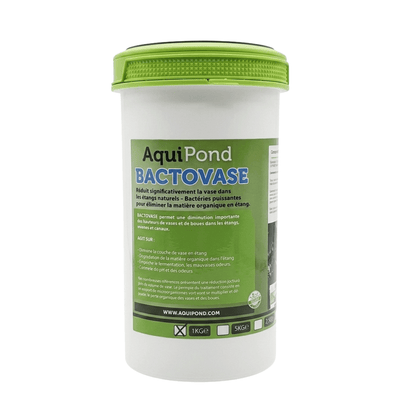 Aquipond Bactovase 1 kg – Bacteria for pond sludge reduction (5 to 10 m²)
€43,95
Voir le produit
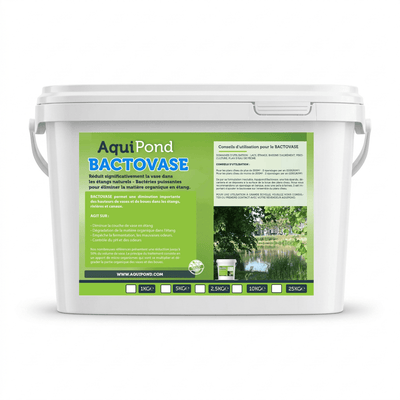 Aquipond Bactovase 2.5 kg – Bacteria to reduce pond sludge (12.5 to 25 m²)
€98,95
Voir le produit
 Aquipond Bactovase 5 kg – Bacteria to reduce pond sludge (25 to 50 m²)
€166,10
Voir le produit
À lire aussi
Tous les conseils Clear water but a dirty pool: why transparency means nothing, and the method used by the most beautiful pools for truly healthy water
6 min de lecture
 Gorgeous pool in spring, tired by summer: why it deteriorates month after month
7 min de lecture
 Algae are almost never the real problem in your pond
7 min de lecture
Leave a comment