
Skip to content
🔥 FREE SHIPPING ON ORDERS OVER €149 INCLUDING TAX IN FRANCE & BELGIUM! 🔥

DESMOPUNTIUS RHOMBOOCELLATUS 2.5CM

Original price €2,87 - Original price €2,87
Original price
€2,87
€2,87 - €2,87
Current price €2,87

SECURE PAYMENT

apple pay american express master paypal visa

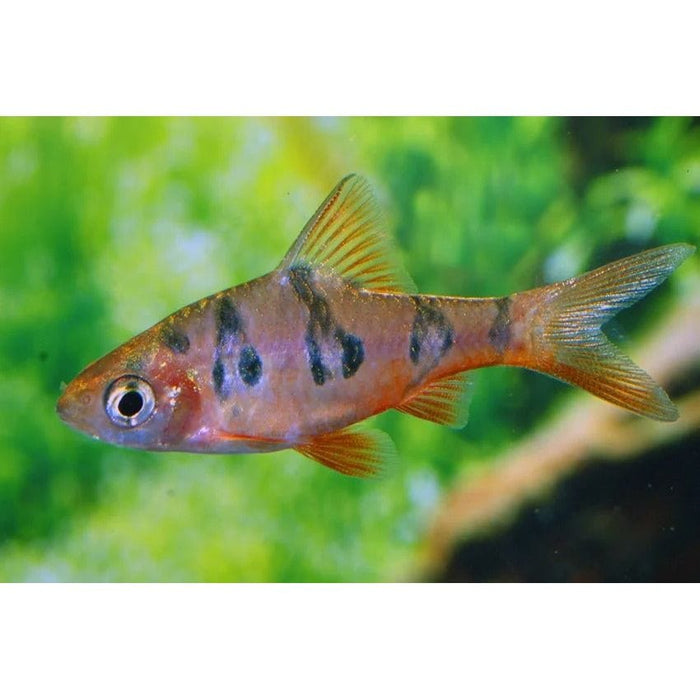
The Desmopuntius rhomboocellatus, also known as the "Ocellated Barb" or "Diamond Barb," is a small tropical fish native to the rivers and swamps of Borneo. At a juvenile size of 2.5 cm, it is appreciated for its distinctive dia...
Lire la suite >>

SKU V1452560
Barcode 8715897304545

Description du produit :

The Desmopuntius rhomboocellatus, also known as the "Ocellated Barb" or "Diamond Barb," is a small tropical fish native to the rivers and swamps of Borneo. At a juvenile size of 2.5 cm, it is appreciated for its distinctive diamond-shaped pattern and its active, social behavior, making it a perfect choice for community aquariums.


Main Features:

  • Origin: Borneo, Southeast Asia.
  • Adult size: Up to 5 cm.
  • Behavior: Peaceful and schooling, it prefers to live in groups of 6 or more individuals.
  • Habitat: Ideal for planted aquariums with gentle filtration and shaded areas.
  • Diet: Omnivorous – accepts dry foods (flakes, pellets), live or frozen prey (brine shrimp, bloodworms).
  • Water parameters:
    • Temperature: 22-26°C
    • pH: 6.0-7.0
    • Hardness: Low to medium (2-10 dGH).

Why choose the Desmopuntius Rhomboocellatus?

  • Unique appearance: Its diamond patterns and bright colors add an elegant touch to any aquarium.
  • Schooling species: Ideal for creating a lively and harmonious dynamic in a community aquarium.
  • Easy care: Suitable for beginner aquarists thanks to its hardiness and undemanding diet.
  • Peaceful behavior: Compatible with a wide variety of non-aggressive species.

Tips for an optimal habitat:

  • Maintain a plant-rich environment with moderate lighting to recreate its natural habitat.
  • Add roots or dead leaves to encourage natural behavior.
  • Keep good water quality with regular changes to avoid stress.
  • Feed a varied diet to support its growth and coloration.