


Dog cyanobacteria: dangers during swimming sessions
Has your dog just come into contact with suspicious water? Rinse it with clean water, prevent it from licking itself, and call your vet or out-of-hours service now, even if it seems fine. Signs can appear within minutes.
Cyanobacteria, also known as blue-green algae, can produce toxins that are dangerous to dogs. Toxic water cannot be identified by sight, and there is no specific antidote. Severe poisoning can be fatal within hours. This article tells you the warning signs and the right steps to take: it is not a substitute for a vet, who is the only one able to make a diagnosis and decide on treatment.
A few minutes may pass before the first signs appear
Several days may pass before liver damage appears
No antidote treatment is supportive care
Why dogs are so exposed
A dog does not just swim. It drinks while playing, carries a stick in its open mouth, and roots around the banks. It can therefore ingest toxins in three ways:
- by drinking the water, during or after a swim;
- by licking its coat after getting out of the water;
- by eating deposits, algae, or dead fish washed up on the bank.
Not all blooms are toxic, but there is no way to tell by looking at them. Deposits washed up on the bank and water licked off the coat count just as much as water drunk: a dog that has not swum can also be exposed. The safest thing to do is therefore to treat all suspicious water as dangerous.
Recognizing risky water
Some clues should prompt you to call your dog back before it enters the water:
- a blue-green, bright green, or reddish-brown colour;
- scum, foam, or a floating mat;
- a film resembling paint, or deposits on the bank;
- a smell of decaying vegetation;
- stagnant water, in hot weather and after a period without rain.
The reverse is not true: water that looks normal proves nothing. Rinse your dog after a swim, even if the water seemed clean.
In Wallonia, the Baignade du Portail Environnement website shows which areas are open or closed, with an update from May 15 to September 30. It only covers official swimming areas: an unsupervised pond, canal, or lake is not included. The Walloon Public Service also recommends not letting animals drink from stagnant water during heatwaves.
To learn how to distinguish a bloom from simply green water, see our article on cyanobacteria in ponds.
Warning signs
The signs depend on the toxin involved. Some attack the nervous system and act very quickly, others the liver and can take longer.
- Nervous system: excessive salivation, foam at the mouth, tremors, wobbly gait, collapse, convulsions, difficulty breathing.
- Digestive system and liver: vomiting, diarrhoea, loss of appetite, extreme tiredness, yellowing of the mucous membranes.
- Skin and eyes: redness, itching, irritation.
Any unexplained malaise during the day following contact with water should alert you. Do not try to make the decision yourself: these signs resemble those of other problems, and it is up to the vet to decide what to do next.
Your dog drank this water: what to do?
Do not wait for signs. The vet can act more effectively when the exposure is recent.
- Keep it away from the water. It must not drink any more or go back in.
- Rinse it with clean water. Tap water or a hose, over the entire coat, belly, and paws. Then wash your hands thoroughly.
- Prevent it from licking itself until its coat is dry.
- Call your vet or out-of-hours service, even if it seems fine, and follow their instructions.
- Prepare useful information: location, time, duration of contact, signs observed. A photo of the water can help.
What not to do. Do not induce vomiting on your own initiative: this is a veterinary procedure, which can be dangerous depending on the dog's condition. Do not give any home remedies or medication, and do not wait to see if it passes.
There is no specific antidote. Treatment aims to support the body and is generally carried out in a clinic. A severe form can develop very quickly: this is why every minute counts.
Prevention on walks and in the garden
The simplest rule can be stated in one sentence: if in doubt, stay away.
- Keep your dog on a lead near suspicious water or a bank covered in deposits.
- Respect swimming bans, and check with the local council before going to an unknown body of water.
- Bring fresh water so it does not need to drink on site.
- Rinse it after every swim, before it licks itself.
Keep a bottle of clean water and a towel in the car during the summer. You can rinse your dog immediately, without waiting to get home.
In the garden, a pond or basin can also be affected. If you see scum or a suspicious mat, keep the dog away. Do not rely on water treatment to let it back in quickly: as long as doubt remains, access remains closed. Our guide on cyanobacteria in natural ponds explains how to work on the biological balance of the body of water.
Are you unsure about the water in your own pond? For your dog, the priority remains the vet. For the water, our experts can help you.
Request a water analysisFrequently asked questions
How can I tell if my dog has been affected by cyanobacteria?
You cannot confirm it yourself. Excessive salivation, vomiting, diarrhoea, tremors, wobbly gait, or extreme tiredness after contact with suspicious water should prompt you to call a vet. Any unexplained malaise during the day following contact also counts.
What to do if my dog has ingested cyanobacteria?
Prevent it from drinking any more, rinse its coat with clean water, prevent it from licking itself, and call a vet without delay, even if it seems fine. Do not induce vomiting and do not give any remedies without their advice.
Can my dog be poisoned without drinking the water?
Yes. It can ingest toxins by licking its coat after a swim, or by eating deposits washed up on the bank. Contact with the skin can also cause redness and itching.
How long after contact do signs appear?
Most often within a few minutes to a few hours. Liver damage can take longer to manifest, sometimes several days. Therefore, an absence of signs immediately after a swim does not allow you to conclude.
Can a garden pond be dangerous for my dog?
Yes, as soon as cyanobacteria develop in it. Keep the dog away from the water as long as doubt remains, and do not let it drink or swim.


Also read
To learn more: Cyanobacteria in a natural pond: complete guide to restoring healthy water
READ THE ARTICLESources and references
- Cornell University, Riney Canine Health Center: Blue-green algae poisoning
- CDC: Preventing Pet and Livestock Illnesses Caused by Harmful Algal Blooms
- CDC: For Veterinarians, Harmful Algal Bloom-Associated Illnesses
- Minnesota Department of Health: Veterinary fact sheet on blooms
- SantéVet, Veterinary Dr. Juliette Garnodier: Cyanobacteria in dogs
- RTBF: Cooling off your animal in lakes and streams
- L'Avenir: Beware of cyanobacteria, deadly for your dogs
- Wallonie.be: Swimming in rivers and lakes
Last updated: November 4, 2026.
Les produits conseillés par nos experts
Voir toute la sélection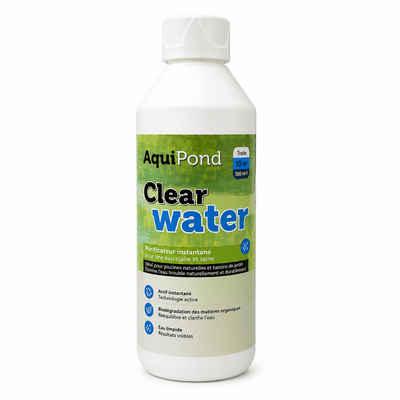 Aquipond ClearWater 10M³ - Works effectively on green water - Instant clarifier
€31,45
Voir le produit
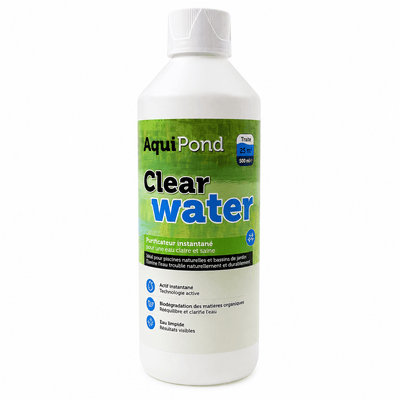 Aquipond ClearWater 25M³ - Works effectively on green water - Instant clarifier
€41,95
Voir le produit
 Aquipond Starter Pack (Nitriboost & Bacto Maintenance)
€94,45
 Aquipond BactoClay - Montmorillonite clay 2 kg for koi ponds
€41,95
Voir le produit


Leave a comment