


Hydrogen peroxide for filamentous algae: what it really does and how to use it safely
On forums, the recipe has been circulating for years: pour a bottle of pharmacy hydrogen peroxide over filamentous algae, and the next day they are white. It is true, it works. But what burns an alga can also burn a gill, and every season we receive photos at the store of distressed fish after a slightly too generous “homemade” treatment. Hydrogen peroxide is a powerful oxidizer that destroys filamentous algae on contact without addressing the cause of their return; used correctly, it is a useful remedy, but if overdosed, it causes damage.
— The short answer
Hydrogen peroxide attacks the cells of filamentous algae and then breaks down into water and oxygen. It works quickly, but it is also aggressive toward fish gills and filter bacteria if the dose is not carefully controlled. Choose an active oxygen product formulated for ponds, with a dosage specified by the manufacturer, and address the cause at the same time: excess phosphates and organic matter.

How hydrogen peroxide works on algae
Hydrogen peroxide is hydrogen peroxide diluted in water. When it comes into contact with organic matter, it releases highly reactive oxygen that oxidizes cell walls and contents. Filamentous algae, made up of long chains of thin cells, are particularly vulnerable: they turn white, fragment, and detach within one to three days. This whitening is what convinces so many owners.
Once its reaction is complete, the peroxide breaks down into water and oxygen, without leaving a lasting chemical residue. This is its main advantage over other algaecides. It is also the source of a common misconception: “since it ends up as oxygen, it is harmless.” During the hours when it is active, it cannot distinguish between algae and delicate living tissue.
What it may damage along the way
| Target | Risk in case of overdosing | Sign to monitor |
|---|---|---|
| Fish gills | Irritation, epithelial lesions | Fish at the surface, rapid breathing, rubbing |
| Filter bacteria | Reduced nitrification activity | Nitrite spike a few days later |
| Higher plants | Thin leaves burned | Oxygenating plants turning yellow |
| Water oxygen | Drop after massive algae die-off | Fish gasping for air early in the morning |
The last point is the most insidious. A large mass of algae killed all at once decomposes on the bottom and consumes oxygen for several days. Boyd and Tucker describe this mechanism clearly in fish ponds: fish often suffer after treatment, not during it. Noga, for his part, notes that hydrogen peroxide is used in fish farming as an external treatment, but with a narrow safety margin that varies depending on the species and temperature.
AlgoLon – filamentous algae treatment – OASE
An active oxygen treatment formulated for ponds, with a volume-based dosage specified by the manufacturer. Live price and add to cart:
Pharmacy product or pond treatment?
Pharmacy hydrogen peroxide known as “10-volume” contains approximately 3% peroxide. More concentrated solutions sold for industry or pools are dangerous to handle, both for the skin and the eyes, and have no place near a fish pond. The real problem with a pharmacy bottle is not the product, but the dosage: without knowing the pond's precise volume, people pour it “by eye,” and the eye is almost always wrong in the direction of overdosing. We therefore do not provide a homemade dosage.
Active oxygen products for ponds, often based on percarbonate, release oxygen more gradually and come with a dosage per cubic metre. They are still oxidants: follow the doses, do not combine them with another treatment during the same week, and do not use them on fish that are already weakened.
BiOx 1000 ml – active oxygen for ponds – Colombo
A liquid active oxygen alternative, pre-dosed by volume, for treating filaments without guesswork. Live price and add to cart:
The right method, if you treat
Start by mechanically removing as much of the filaments as possible: a brush or a stick twisted through the mats is enough. The less algae there is to kill, the less decomposing matter there will be afterward. Measure or calculate the pond's actual volume. Treat in the morning, in cool weather rather than during a heatwave, and leave an air pump running for the following nights. Watch the fish during the first few hours; at the first sign of distress, perform a partial water change.
In the days that follow, remove dead algae with a net before they sink, then check nitrite levels for a week. If the filter has been affected, adding beneficial bacteria will help it restart.
Why they come back, and what works long term
Hydrogen peroxide treats the symptom. Filamentous algae thrive in clear, bright, nutrient-rich water, especially water rich in phosphates. As long as these conditions remain, they grow back within a few weeks. Over time, what works is reducing inputs (food, leaves, runoff), exporting nutrients by pruning plants and cleaning sludge, and binding phosphates. It is less spectacular than a bottle, but much more durable.
AquaActiv PhosLess – OASE
Binds phosphates, the main fuel for filamentous algae, to limit their return after treatment. Live pricing and add to cart:

You may also like
For further reading: Understanding and using active oxygen for a healthy pond.
READ THE ARTICLEBefore treating, send us a photo of the algae and your pond's volume: the Aquiflor team in Nodebais and Foudebassin will tell you which product and dose are suitable, or frankly advise you not to treat.
Frequently asked questions
— Is hydrogen peroxide dangerous for fish?
It can be dangerous in case of overdosing: it irritates the gills, and the decomposition of killed algae lowers oxygen levels. The risk mainly comes from approximate dosing.
— How long does it take to see the effect?
The filaments generally turn white within one to three days. They must then be removed before they sink and rot.
— Does hydrogen peroxide kill filter bacteria?
It can reduce their activity if improperly dosed. Monitor nitrites the following week and reseed the filter if necessary.
— Why do filamentous algae return after treatment?
Because the treatment does not affect their food source. Without reducing phosphates and organic matter, they grow back within a few weeks.
In summary
- Hydrogen peroxide burns filamentous algae on contact and breaks down into water and oxygen.
- If improperly dosed, it damages gills, filters and plants, then causes oxygen levels to drop.
- Choose an active oxygen product formulated for ponds, with a known dosage.
- Remove the filaments before and after treatment, and aerate at night.
- Over time, only reducing phosphates and exporting nutrients prevents their return.
Sources and references
- Noga E. J., Fish Disease: Diagnosis and Treatment, 2nd edition, Wiley-Blackwell, 2010
- Boyd C. E. and Tucker C. S., Pond Aquaculture Water Quality Management, Kluwer, 1998
- Manufacturer technical data sheets (OASE, Colombo)
- Aquiflor / Foudebassin consulting experience, Nodebais (Belgium)
Last updated: September 29, 2026.
Les produits conseillés par nos experts
Voir toute la sélection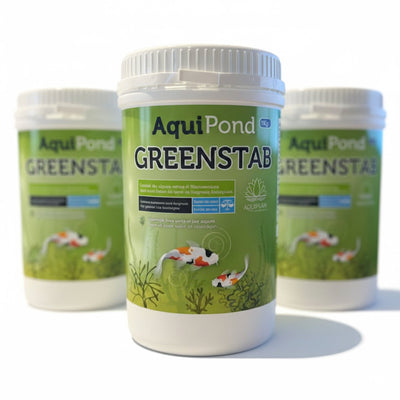 Aquipond Greenstab - Balanced pond water, limits algae
À partir de €36,70
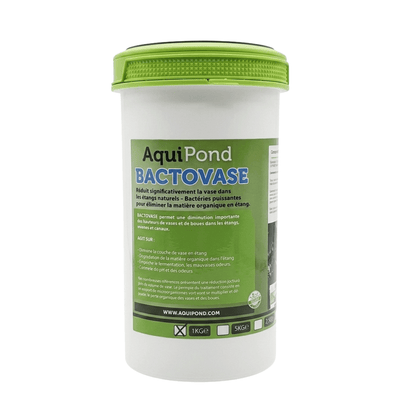 Aquipond Bactovase 1 kg – Bacteria for pond sludge reduction (5 to 10 m²)
€41,95
Voir le produit
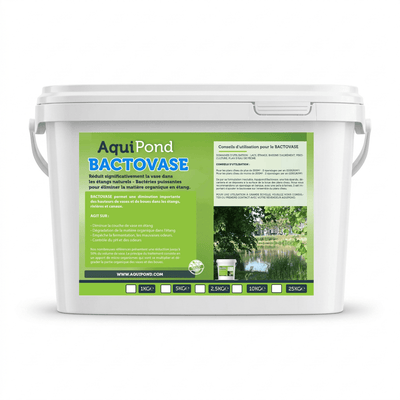 Aquipond Bactovase 2.5 kg – Bacteria to reduce pond sludge (12.5 to 25 m²)
€94,45
Voir le produit
 Aquipond Bactovase 5 kg – Bacteria to reduce pond sludge (25 to 50 m²)
€158,55
Voir le produit


Leave a comment