


The Foudebassin.com team
Published
7 min read
Vase turrets at the bottom of a natural swimming pool: where do they come from and how can they be eliminated?
One July morning, you dive your head under the water of your natural swimming pool and discover dozens of small brown chimneys on the clear bottom, from a few millimeters to one or two centimeters high. Some stand upright, others lie down, and sometimes they seem to move. It is a question we are asked every summer in Nodebais. In the vast majority of cases, these “turrets” are tubes or cases built by aquatic insect larvae from the fine particles on the bottom: they are not dangerous, but they indicate a sediment deposit that needs to be addressed.
— The short answer
The turrets are most often tubes made by midge larvae (red “bloodworms,” the larvae of small non-biting midges) or cases made by caddisfly larvae. To eliminate them: vacuum the bottom and brush the walls, remove the sediment with the vacuum rather than stirring it back into suspension, then reduce what feeds this deposit (leaves, pollen, insufficient circulation) and support the bacteria that break down organic matter. Do not use any insecticide.

Who builds these turrets?
A natural swimming pool is a living environment. From the very first weeks, flying insects come to lay their eggs there, just as they do in a pond. Their larvae live on the bottom and protect themselves by making a shelter from whatever they find: grains of sediment, plant debris, fine sand, all held together by silk that they secrete. Limnologists describe these communities of bottom-dwelling invertebrates, the benthos, as one of the essential links in the recycling of organic matter in freshwater.
| What you see | Likely author | What this indicates |
|---|---|---|
| Small, fixed, upright tubes with a red or whitish larva inside | Midge larvae | Deposit of fine sediment rich in organic matter |
| Mobile cases made of grains of sand or twigs | Caddisfly larvae (trichopterans) | More likely good-quality water, with plant debris available |
| Small mounds or twists of sediment with no visible larva | Aquatic worms in the sediment | Thick, oxygen-poor layer of sediment |
To determine which one it is, collect a turret with a small pond net or a glass and observe it in a white container. A bright red larva that wriggles is a midge larva; a larva that carries its house as it moves is a caddisfly larva.
Is it dangerous for swimmers?
No. Adult chironomids look like mosquitoes but do not bite, and caddisfly larvae are generally a favorable sign. The real issue lies elsewhere: a high density of chironomid cases almost always indicates a layer of organic sludge on the bottom of the swimming area, and this sludge is also a phosphate reserve for algae. So we do not treat the larvae; we treat their food supply.
Step 1: vacuum rather than stir
The instinct to run a pool brush over the bottom is a bad idea: you stir the sludge back into suspension, the water becomes cloudy for two days, and everything settles back in the same place. A pond vacuum, on the other hand, removes the sludge and cases from the water. Work slowly, in strips, starting with the calm areas where circulation is weakest: corners, the foot of the stairs, and the bottoms of dividing walls. On vertical walls, gentle brushing directly in front of the vacuum nozzle dislodges the attached cases.
Pondovac 4 – Oase
Continuous vacuuming, without interruption to empty the tank: suitable for the bottom of a medium-sized swimming area. Live price and add to cart:
Step 2: reduce what falls into the water
Sludge in a natural swimming pool mainly comes from outside: leaves, faded flowers, pollen in spring, dust, and soil brought in on swimmers' feet. A skimmer that runs continuously collects most of what is floating before it sinks. Also trim the wetland plants that droop into the swimming area, and install a doormat or a small shower at the edge if children come off the lawn to jump straight into the water.
SwimSkim 50 – Oase
Floating skimmer that follows water-level changes and catches leaves and pollen before they become sludge. Live price and add to cart:
Step 3: improve circulation along the bottom
The cases accumulate where the water stagnates. If they always collect in the same corner, the pump flow is not reaching it. Depending on the design of your swimming pond, it may sometimes be possible to redirect a return jet, add a bottom drain, or extend the pump's operating time in summer. Water that circulates well along the bottom remains better oxygenated, which speeds up the breakdown of organic matter.
Step 4: help bacteria digest the remaining sludge
After vacuuming, a thin organic film always remains. Bacteria specifically suited to natural swimming ponds help break it down and limit its reformation. Their effectiveness depends on temperature and available oxygen: they therefore deliver their best results in summer, with the pump running. They do not replace vacuuming; they extend its effects.
BactoPool 10 kg – Aquatic Science
Bacterial blend designed for natural swimming pools and ecological swimming areas up to 100 m³, to break down organic deposits on the bottom. Direct price and add to cart:
What not to do
No insecticide or “anti-larvae” product has any place in a natural swimming area: they affect all the beneficial small fauna, including the natural predators of mosquito larvae. No chlorine either to “disinfect” the bottom, as it would destroy the filter’s bacterial flora. Finally, do not drain the pool to scrub it: refilling often triggers an algae cycle that is far more troublesome than a few turrets.

You may also like
For more information about vacuuming the bottom: How to clean sludge from a swimming pool?.
READ THE ARTICLEUnsure what is colonizing the bottom of your swimming area? Send a clear photo of a turret to the Foudebassin team: we will help you identify it and choose the right vacuum for your surface.
Frequently asked questions
— Are the turrets on the bottom of my natural swimming pool mosquitoes?
No. They are most often chironomid larvae, midges that resemble mosquitoes but do not bite, or caddisfly larvae.
— Can you swim with turrets on the bottom?
Yes, they are harmless to swimmers. They simply indicate that a layer of organic sludge has formed and that the bottom needs cleaning.
— Why do they come back after each vacuuming?
Because new insects lay eggs continuously and the sludge reforms. Reducing leaf input and improving circulation at the bottom significantly extends the time between interventions.
— Is treatment against the larvae necessary?
No. Insecticides harm all the beneficial fauna in the swimming area. Treat the sludge that feeds the larvae, not the larvae themselves.
In summary
- The turrets are tubes or cases made by insect larvae, especially chironomids and caddisflies.
- They are harmless but reveal a deposit of organic sludge.
- Vacuum the bottom instead of sweeping it, focusing on quiet areas.
- Limit input with a skimmer and improve circulation at the bottom.
- Specific bacteria as support; never insecticides or chlorine.
Sources and references
- Wetzel R. G., Limnology, 3rd edition, Academic Press, 2001
- Boyd C. E. and Tucker C. S., Pond Aquaculture Water Quality Management, Kluwer, 1998
- FLL (Bonn), recommendations for maintaining natural swimming ponds
- Manufacturer technical data sheets: Oase (Pondovac, SwimSkim), Aquatic Science (BactoPool)
- Foudebassin consulting experience, Nodebais (Belgium)
Last updated: September 29, 2026.
Products recommended by our experts
See the full selection Aquipond Bactovase Liquide 1 L or 5 L - Anti-sludge bacteria for ponds
À partir de €39,00
View product
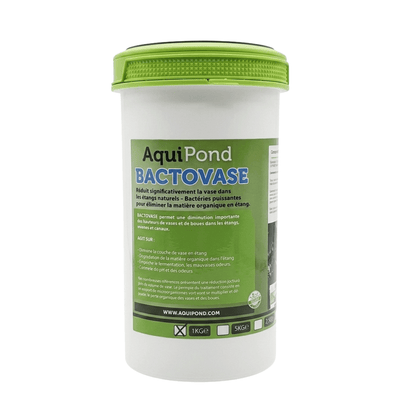 Aquipond Bactovase 1 kg – Bacteria for pond sludge reduction (5 to 10 m²)
€39,95
View product
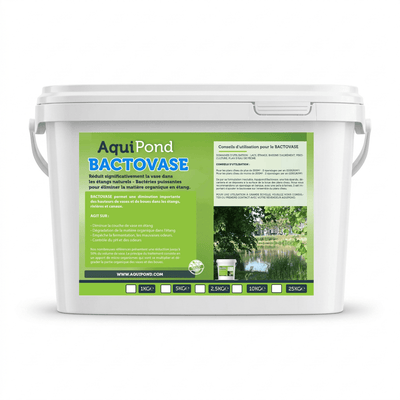 Aquipond Bactovase 2.5 kg – Bacteria to reduce pond sludge (12.5 to 25 m²)
€89,95
View product
 Aquipond Bactovase 5 kg – Bacteria to reduce pond sludge (25 to 50 m²)
€151,00
View product
Read also
All our tips How to treat a natural pool without chlorine: the biological methods that work
Updated November 22, 20267 min read
 Bacteria for natural swimming pools: which ones and when?
Updated November 22, 20265 min read
 Transforming a chlorinated pool into a natural pool: steps, costs, and pitfalls
Updated November 22, 202611 min read
Leave a comment