


The Foudebassin.com team
Published
2 min read
My goldfish has black spots: disease, burn, or just a change in color?
It is one of the questions that comes up most often among pond owners: “My goldfish is turning black in places, is it sick?” In the majority of cases, the answer is no. But you need to know how to read the other signs.
Cause no. 1: a natural color change
Young goldfish are born grey-bronze and develop their color as they grow. In some, black areas appear or disappear for months, or even years. Shubunkins and calico comets often change pattern. If the fish eats, swims normally, and the spots are smooth, without any raised texture, it is simply pigmentation. See the shubunkin.
Cause no. 2: healing after an ammonia burn
When the water contains too much ammonia (overcrowding, insufficient filtration, overfeeding), the skin and fins are burned. As they heal, they develop black pigmentation. The spots then often appear on the edges of the fins and on the back, sometimes after a period when the fish was lethargic. The black color is a sign that it is getting better, but the water must be tested.
Cause no. 3, less common: a parasite
Small, raised black spots, like peppercorns, can be cysts containing trematode larvae, transmitted by snails and birds. They are generally harmless to the fish.
What to do?
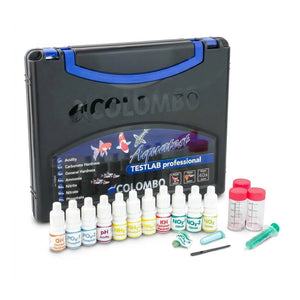
- Test the water: ammonia, nitrites, pH.
- Observe the behavior: appetite, swimming, fins spread or clamped.
- If everything is normal, do nothing: it is just color.
- If the water quality is poor, change part of it and address the cause.
See also the signs of a sick fish.
Frequently asked questions
Will the black spots go away?
Often yes, within a few weeks or months, especially after a burn.
My goldfish is turning white, is it serious?
Discoloration with age is common and normal.
What about you?
Has your goldfish changed color over the years? Show us the before and after in the comments.
Also read: Veil tail, oranda, lionhead and The 3-second memory, a myth.
Produits et rayons conseillés

Products recommended by our experts
See the full selection Aquipond ImmunoFish – 1 Liter – Koï Mucus for 20 m³
€39,95
View product
 Aquipond ImmunoFish – 2.5 Liters – Koï Mucus for 50 m³
€59,95
View product
 Aquipond ImmunoFish – 5 Liters – Koï Mucus for 100 m³
€89,95
View product
 Malamix 17 – organic supplement for koi and pond fish – 1 L
€28,71


Leave a comment