


List of oxygenating plants that live in water for a balanced pond
Are you looking for a list of oxygenating plants that live in water to have a balanced pond? If so, do you know how to find oxygenating plants and where to order them? Today, we explain why and how to add oxygenating plants to your pond.
As one might assume, these aquatic plants grow below the water level, i.e., beneath the surface. These plants are described as such because they release oxygen into the pond or pool water. Obviously, this oxygen supply is vital for the fish.
In short: Oxygenating plants grow below the surface and release oxygen into the water during the day, but consume some at night. Favour native species such as hornwort, water starwort, water milfoil or pondweeds, and don't let them cover more than half of the pond surface.
Daytimesubmerged plants produce oxygen
At nightthey consume it: provide aeration
Nativespecies to prioritize: hornwort, water starwort, pondweeds...
½ surfacemaximum coverage, according to the article below
Are oxygenating plants necessary in a pond?
In short, the answer is yes. Oxygenating plants are literally indispensable if you have a garden pond or pool. As we noted previously, they grow below the water level and are absolutely necessary for maintaining the proper balance of the pond.
On the other hand, they contribute significantly to improving and optimizing the nitrogen cycle. In other words, they participate in cleaning the pond water by assimilating excess organic matter from it.
The roles of oxygenating plants in a pond
Aquatic plants perform a doubly important role in the pond's ecosystem. They take care of producing oxygen while absorbing impurities from the pond. This latter function helps keep the pond clear and clean.
Finally, most of these aquatic plants filter the water and limit the spread of undesirable algae. Specifically, they do this by competing with them for nutrient consumption.
You might be interested in: we have an article that explains how to limit algae in a pond or pool.
The nitrogen cycle in a few words
In the context of a pond, the nitrogen cycle is an important parameter to consider. It is a cycle describing the different stages and modifications undergone by nitrogen in its various forms. Specifically: organic nitrogen, nitrates, nitrites, ammonia, and dinitrogen. In other words, plants with filtering capabilities are responsible for assimilating excess organic matter from a pond.

As long as this cycle is not well-established, especially in a new pond, the pond water can be toxic to fish. It is during this period that ammonia from waste and organic matter turns into nitrites before breaking down into nitrates. This is where plants intervene, by assimilating nitrates and producing oxygen. Finally, the nitrogen cycle is one of the aspects to consider before putting fish in a new pond.
Photosynthesis and oxygenation
Plants produce oxygen through the reaction known as photosynthesis. What is photosynthesis? To illustrate it more simply, let's go back to school for a moment and rediscover what this phenomenon is.

Simplified, photosynthesis consists of synthesizing organic matter from soil water and carbon dioxide from the air. This procedure uses energy provided by the sun and takes place in cells that contain chlorophyll. The result will be the production of oxygen and its release into the atmosphere.
In the case of a pond, it therefore involves the use of solar energy to synthesize carbohydrates and release oxygen into the water.
What are the benefits of oxygenating plants?
Oxygenating plants bring together a range of benefits that are both interesting and effective. It is therefore normal that they are highly appreciated in the world of ponds and pools. And with good reason, they play a major role in the balance of these types of ecosystems.
The benefits of oxygenating plants
Both for aesthetics and utility, oxygenating plants are virtually essential when you have a pond. Below is a non-exhaustive list of what aquatic plants contribute to a water feature.
- Indispensable for bacteria
- Provide oxygen to the water
- Beneficial to living organisms in the pond
- Accelerates the sedimentation of suspended matter
- Support for fish spawning
- Refuge for pond fauna and flora
In summary, these totally or partially submerged plants produce oxygen during the day. At the same time, they provide a natural shelter for aquatic life. This particularly concerns newts, fry, and other amphibians.
Be careful not to overload your pond with oxygenating plants
Oxygenating plants are vital for maintaining the balance of a garden pond or pool. That said, an excessive quantity of oxygenating plants is not healthy for the pond. It is therefore advisable to monitor their development several times a year.
When necessary, do not hesitate to remove them. Many oxygenating plants are famous for their high rate of proliferation. It must also be remembered that at night, they will consume oxygen.
Therefore, you should avoid having more than 50% of the pond surface covered by oxygenating plants. To better guide you, you can consult our article that explains how to analyze pond water.
List of the most well-known oxygenating plants
To facilitate your choice of oxygenating plants, we advise you to prioritize, from the list of plants below, species native to our regions. They are all quite easy to plant and constitute a very good start in setting up a pond.
Prohibited plants: several oxygenating plants long sold for ponds are now prohibited in the European Union under the Invasive Alien Species Regulation, notably Nuttall's waterweed (Elodea nuttallii), curly waterweed (Lagarosiphon major), Brazilian waterweed (Myriophyllum aquaticum), and cabomba (Cabomba caroliniana). The Canadian waterweed, presented below, is not native and can become invasive. Never dispose of pond plants in a ditch, pond, or stream.
Waterweed (Elodea)
Waterweeds are floating and completely submerged aquatic plants, very popular for decorating aquariums. More specifically, the Canadian waterweed belongs to the Hydrocharitaceae family. It is also known as "water pest".

This oxygenating plant is native to North America and is widely used in phytoremediation. It can be very invasive, but it will also provide a valuable shelter for fry and other aquatic invertebrates.
Water starwort (Callitriche)
Typical of freshwater points, water starworts belong to the Callitrichaceae family. It is an aquatic plant found on the surface of the water, just as it can be found submerged.

Among the most common, the common water starwort is known for its oxygenating properties. Furthermore, it can perfectly serve as a shelter for hosting the eggs of egg-laying fish. Like some oxygenating plants, water starwort can be persistent. It can even become particularly invasive in the sun.
Hornwort (Ceratophyllum demersum)
With a bushy and feathery appearance, Ceratophyllum demersum is known by its nickname: Hornwort. It is a plant almost completely devoid of roots and highly appreciated in aquariology. Permanently submerged, hornwort gives the impression of floating in the water.
This aquatic plant feeds on the same nutrients as algae, which is very effective in preventing their development. Regarding maintenance, leave the dark-colored stems. However, you can remove yellow or light-colored stems.

Hornwort is appreciated by aquarists and amateur gardeners, notably for its resistance. Easy to maintain and not very prone to diseases, this aquatic plant will settle into water points without any trouble.
Hottonia Palustris (water violet)
The water violet or Hottonia Palustris is known by many nicknames. Thus, some will know it as the marsh hottonia or even the featherfoil. It is an aquatic plant that likes to grow in forest ponds and pools.
The marsh hottonia is an excellent plant for oxygenating a garden pond, with violet-pink primrose flowers appearing above the water from May to June.

For its part, this plant is quite demanding. It therefore prefers calm, cool, and non-calcareous waters. Finally, a depth of 60 cm is needed for the water violet to develop correctly.
Hippuris Vulgaris or mare's tail
The Hippuris Vulgaris plant is known more commonly as mare's tail. It is an anti-polluting plant, belonging to the Plantaginaceae family and found in North America, Asia, or Europe. In some regions, it is also called the "oxygenating horsetail".

Widely used in phytoremediation, mare's tail is an oxygenating plant that absorbs nitrates and phosphates. At the same time, it constitutes a very suitable refuge for aquatic fauna.
Fontinalis antipyretica or willow moss
Similar to Java moss, Fontinalis antipyretica is often found on the banks of streams and rivers. Resistant and not very demanding, it is also known as willow moss.

The Fontinalis antipyretica is a very hardy oxygenating moss. It can dry out in the sun and regain all its greenery as soon as it is submerged. At the same time, it provides shelter for fry and insect larvae during breeding periods.
Myriophyllum spicatum
The Eurasian watermilfoil, or Myriophyllum spicatum, is an aquatic plant with long floating stems. It is a plant native to Europe that has bushy, feathery, olive-green foliage. Small yellow and red flowers appear above the water surface between May and August.

Ideally, you should provide a minimum water depth of 30 cm to accommodate them. A maximum depth of 90 cm is preferred. Finally, it should not be confused with other non-native milfoils, such as Myriophyllum aquaticum (parrot's feather), an invasive alien species banned in the European Union.
Potamogeton (all varieties: crispus)
The Potamogeton or pondweeds are aquatic plants whose flowers are grouped in spikes. Their leaves are partially submerged and partially floating. The Potamogetonaceae family includes members known for their filtering properties.

Among others, curly pondweed or Potamogeton crispus is a submerged oxygenating plant. It has the particularity of growing quickly and quite easily. Pondweeds often serve as hiding places and shelters for the surrounding aquatic fauna.
Ranunculus aquatilis or common water-crowfoot
Known by its scientific name Ranunculus aquatilis, this aquatic plant is known by many nicknames. It is called the common water-crowfoot or water buttercup.

Capable of growing underwater as well as on the surface, this oxygenating plant is found in ponds and slow-flowing streams. In terms of oxygenation, it is often considered to be more beneficial than Canadian waterweed.
Sagittaria
Quite atypical in their appearance, sagittarias are those aquatic plants also known as arrowhead plants. Also called water arrows, they are characterized by their filtering and oxygenating properties.

More specifically, Sagittaria latifolia are plants known for their hardiness. In this case, they can withstand salinity as well as wastewater. In addition to being decorative, the arrowhead is able to adapt to fluctuations in water level.
Vallisneria spiralis
These aquatic plants are more commonly called Vallisneria spiralis, or tape grass. The beds they form are generally rich in biodiversity and are characterized by high oxygenation potential.

We often find tape grass in both aquariums and ponds. However, its rapid growth must be taken into account.
Where to install oxygenating plants in the pond?
After this overview, keep in mind that every plant has its preferred zone. Shallow-water species thrive on shelves, others prefer the deep zone, and some do not even need to be planted.
You will find the species available according to the season in our collection of oxygenating plants. To complete the purification, pair them with filtering aquatic plants on the banks and a few floating plants that provide shade.
Are oxygenating plants sufficient for fish?
The answer is quite short: no 🙂 Plants do produce oxygen throughout the day, but they consume it during the night. It is for this reason that we recommend using an air pump in addition to oxygenating plants.
The minimum level of oxygen is generally reached in the early morning, especially after a hot and stormy night. This is when fish come to breathe at the surface when the pond lacks aeration. To choose the right solution, consult our guide how to oxygenate pond water.
Air pump and oxygenating plants: the winning combo!
This alternative will help properly oxygenate your water feature without compromising its health. The idea is to optimize the oxygen supply to the pond: the combined use of an aerator and oxygenating plants provides an abundance of dissolved oxygen.
At the same time, this solution will offer a habitat and hiding places for snails, fish, and other inhabitants of the water feature.
OASE AquaOxy 500Complete aeration kit for ponds up to 5 m³: quiet, it ensures safety during summer nights.See the product →All our pond aeratorsAir pumps and aeration kits categorized by the volume of your pond.See the collection →
Planting and maintaining your oxygenating plants
Oxygenating plants are easy to install, provided you do not give them more nutrients than necessary: soil that is too rich would also feed the algae.
- Choose the right time. Planting is mainly done in spring and early summer when the water warms up; see our article on the best times to plant in an aquatic environment, cited in the conclusion.
- Use a basket. Place the plants to be rooted in a planting basket lined with fabric, using poor, pond-specific soil—never enriched potting soil.
- Weigh down. Cover the surface of the basket with gravel to prevent the soil from dispersing and to stop fish from digging.
- Let rootless species float. Hornwort can simply be placed in the water: it grows while submerged.
- Prune regularly. Remove excess during the season and yellowed or dead parts in autumn, so as not to let the material decompose at the bottom.
In a koi pond, oxygenating plants are often torn out or eaten. Protect them in weighted baskets, behind a screen, or in a separate area. Our article why my koi carp eat my plants details the solutions.
Conclusion
This brief file therefore gives you a fairly broad list of oxygenating plants for your pond. The most important thing will be to regularly check the various parameters of the water and the pond. This will help you maintain them more easily and more effectively.
Don't forget to consider the best times to plant in an aquatic environment. This will be practical for determining the needs and requirements of the pond.
If you have any questions, please don't hesitate to contact us! Our team will be delighted to assist you and guide you! You can also leave us a comment; we will be happy to answer you 🤗
Finally, we conclude this list with a selection of oxygenating plants and practical accessories for ponds.
Your frequently asked questions about oxygenating plants
How many oxygenating plants are needed in a pond?
There is no universal figure: it all depends on the volume, the sunlight, and the number of fish. Start with a few clumps distributed in the pond, let them settle, then add more. As this article explains, avoid having them cover more than half the surface.
When to plant oxygenating plants?
Mainly in the spring and early summer, when the water warms up and the plants resume their growth. In autumn and winter, most are dormant and do not establish well.
Are oxygenating plants sufficient against algae?
They help a lot because they consume the same nutrients as algae, but they are not always sufficient on their own. Feeding, filtration, and maintenance count just as much. For filamentous algae, see our guide on filamentous algae.
What happens to oxygenating plants in winter?
Their growth slows down significantly. Some species, such as hornwort or curly pondweed, form winter buds that sink to the bottom and sprout again in the spring. Simply remove dead parts in autumn.
Can elodea be put in a pond?
Canadian waterweed is not native and can become very invasive: if you use it, monitor it and never release it into nature. Nuttall's waterweed and large-flowered waterweed (Lagarosiphon) are banned in the European Union.
My oxygenating plants are turning yellow: what should I do?
Remove the yellow or pale stems, as advised for hornwort, and check the light and water quality. A lack of light, cloudy water, or fish pulling at them are the most frequent causes.
Les produits conseillés par nos experts
Voir toute la sélection Burlap 1M x 2M - Ideal for creating aquatic plantations - Aquipond
€13,60
 Aquaoxy 500 - Complete aeration kit for ponds from 0 to 5m³ - Oase
€67,15
Voir le produit
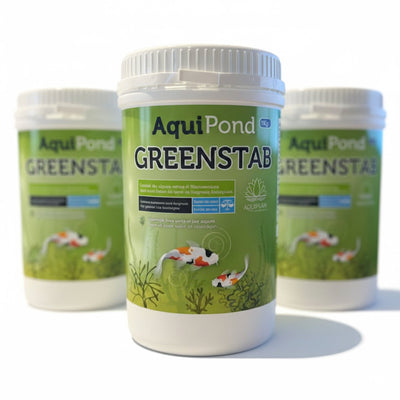 Aquipond Greenstab - Balanced pond water, limits algae
À partir de €36,70
 Aquipond Bacto Maintenance 500G – 0.5 Kg - Maintenance Bacteria - Treats 5m³ throughout the season
€31,30
À lire aussi
Tous les conseils What should you put at the bottom of a preformed pond: pebbles, sand, potting soil, or nothing at all?
5 min de lecture
 Algisin ou Greenstab : quelle solution choisir contre les algues filamenteuses ?
3 min de lecture
 Alternative à Algisin : traiter les algues filamenteuses en douceur avec Greenstab
4 min de lecture
Comments
Leave a comment