


Natural swimming pool: limit filamentous and floating algae without disrupting the biological balance
Swimming in living, chlorine-free water among irises and dragonflies: that is the promise of a natural swimming pool. Then one June morning, green filaments appear on the steps, mats float above the swimming area, and the desire to dive fades. In a natural swimming pool, algae are not controlled in the same way as in a conventional pool: they are limited by controlling phosphorus, carrying out mechanical maintenance and preserving the biofilm. It is a change in approach, but it is what works in the long term.
— The short answer
Filamentous algae develop when the water contains enough phosphorus and receives plenty of light. To limit them: reduce inputs (swimmers, leaves, runoff, top-up water), regularly vacuum the bottom of the swimming area, keep a skimmer running, remove filaments by hand as soon as they appear, and do not strip the biofilm from the walls, as it competes with the algae. Algaecides should be avoided: they treat the symptom and destabilize the system.

Why filamentous algae thrive in natural swimming pools
A natural swimming pool combines the ideal conditions for filamentous algae: very clear water that lets light reach the bottom, smooth surfaces exposed to sunlight, few or no fish to graze on them, and a regular supply of organic matter from swimmers and the surrounding environment. The filaments attach themselves to the steps, walls and gravel, then break off in pieces and rise to the surface as floating mats, lifted by the oxygen bubbles they produce in sunlight.
Their main limiting factor is phosphorus. The German FLL recommendations for natural swimming pools set very low target phosphorus levels, precisely because phosphorus determines algae growth in this type of installation. Everything that introduces phosphorus into the water eventually turns into filaments.
Phosphorus inputs to control
| Input | What needs to be done |
|---|---|
| Swimmers (skin, sunscreen, hair) | Shower before swimming, apply cream well in advance |
| Leaves, pollen, insects | Continuous skimming, net in autumn |
| Garden runoff | Raised coping, no fertilized lawn sloping toward the water |
| Make-up water | Preliminary analysis, source with the lowest phosphorus content |
| Deposits at the bottom of the swimming area | Regular vacuuming, at least during the season |
The impact of swimmers is often surprising. Yet, in a limited volume of water, a family that swims every day in summer introduces a significant organic load. Showering before swimming is a basic rule at public natural swimming ponds; it makes just as much sense at home.
SwimSkim 50 – Oase
Floating skimmer for medium-sized areas, suitable for swimming zones: it catches what falls in before it sinks. Direct price and add to cart:
The biofilm: your silent ally
The instinct of a conventional pool owner is to scrub the walls until they shine. In a natural swimming pool, this is counterproductive. The thin, brownish, slightly slippery layer covering the walls and stones is a biofilm: a community of bacteria and microorganisms that captures dissolved nutrients. It directly competes with filamentous algae for the same resources.
Scraping it off means providing the filaments, which are often the first colonizers, with a fresh surface and more nutrient-rich water. So limit yourself to gently brushing the steps and areas where people place their feet, for comfort and safety reasons, and leave the rest alone. Adding bacteria at the start of the season can help rebuild this flora after winter.
The mechanical maintenance that makes the difference
In a natural swimming pond, maintenance is primarily mechanical, and it is regular. Remove filaments by hand or with a net as soon as they appear, before they form mats: a few minutes a week will prevent a major session in July. Collect floating mats in the morning, while they are still compact.
The bottom of the swimming area deserves regular vacuuming during the season. This is where algae residue, dust, and organic matter settle. Left in place, they decompose and release phosphorus into the water, which fuels the next generation of filaments. A continuous-suction vacuum is particularly convenient for these large surfaces.
Pondovac 5 – Oase
High-performance vacuum with continuous suction, designed for large ponds and swimming pools. Live pricing and add to cart:
The regeneration zone: do not neglect it
Plants in the regeneration zone consume nutrients throughout the growing season. In autumn, if they are not cut back, their above-ground parts fall into the water and return some of what they have absorbed. Cutting and removing faded stems before they collapse is therefore a fully fledged anti-algae measure. The same applies to overly invasive plants: removing some each year exports phosphorus from the system.
Measure rather than guess
A natural swimming pool is easier to manage with figures. Regularly checking the swimming water and make-up water makes it possible to detect a deviation before the filaments make it visible. For phosphorus, a sensitive test is necessary because the values being sought are low.
AquaActiv “Pro” Water Analysis Kit – Oase
Analysis kit for accurately monitoring the parameters of swimming water and make-up water. Live pricing and add to cart:
Why avoid algicides
In the middle of a heatwave, the temptation to empty a bottle of algaecide is strong. In a natural swimming pool, this is rarely a good idea. The dead algae decompose on site and release their nutrients; the biofilm and bacterial flora may be disrupted; and the cause, available phosphorus, remains untouched. The result is often a respite of a few weeks, followed by a relapse. If treatment seems necessary, seek advice beforehand, specifying that it is swimming water.
A calm season at a glance
In spring: complete vacuuming of the bottom, pruning the plants, water analysis, restarting the skimmer. In summer: weekly removal of filaments, regular vacuuming, showering before swimming. In autumn: a leaf net, cutting back plants before they fall into the water, final vacuuming. Accepting a few filaments in midsummer is also part of the game: living water is never sterile.

Read also
For the regeneration zone: Which aquatic plants should you choose for your natural swimming pool?.
READ THE ARTICLEDo you have a natural swimming pool or swimming pond covered in filamentous algae? Describe the installation, the area of the regeneration zone and your filtration system: the Aquiflor and Foudebassin team will help you identify the source of the phosphorus and determine the right maintenance schedule.
Frequently asked questions
— Can you swim with filamentous algae in a natural swimming pool?
Green filamentous algae are not inherently toxic, but they are unpleasant and slippery. However, an oily-looking blue-green film may indicate cyanobacteria: in that case, do not swim until you have received professional advice.
— Should the walls of a natural swimming pool be brushed?
Only steps and high-traffic areas, gently. The biofilm on other surfaces is useful: it competes with algae for nutrients.
— Do bottled bacteria help against filamentous algae?
They can help restore the flora at the start of the season, but they cannot compensate for excess phosphorus. Reducing nutrient inputs remains the priority.
— How often should the bottom of a natural swimming pool be vacuumed?
Regularly during the swimming season, and systematically in spring and autumn. The frequency depends on the surroundings: a heavily wooded garden requires more frequent maintenance.
In summary
- In a natural swimming pool, phosphorus is the main lever for controlling filamentous algae.
- Showering before swimming, a skimmer and an autumn net reduce nutrient inputs.
- The biofilm on the walls competes with algae: do not scrub it off.
- Early manual removal, bottom vacuuming and cutting back faded plants.
- Algaecides treat the symptom and disrupt the system.
Sources and references
- FLL Bonn, recommendations for the planning, construction and maintenance of private natural swimming pools
- Wetzel R. G., Limnology: Lake and River Ecosystems, 3rd edition, Academic Press, 2001
- Scheffer M., Ecology of Shallow Lakes, Chapman & Hall, 1998
- Oase manufacturer technical data sheets (SwimSkim, Pondovac, AquaActiv)
- Aquiflor / Foudebassin consulting experience, Nodebais (Belgium)
Last updated: September 29, 2026.
Les produits conseillés par nos experts
Voir toute la sélection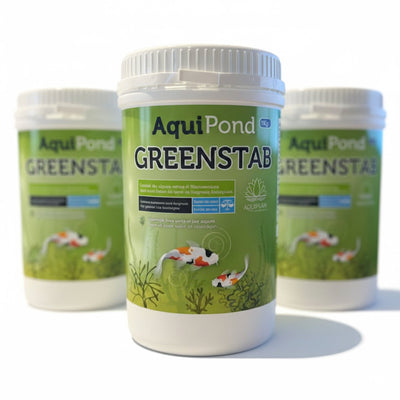 Aquipond Greenstab - Balanced pond water, limits algae
À partir de €36,70
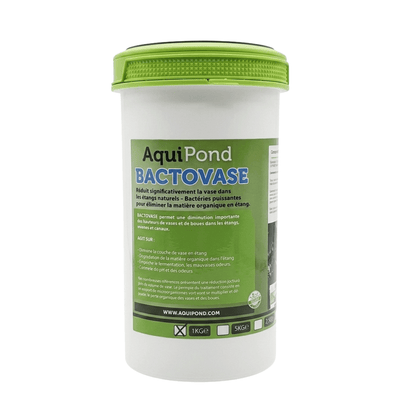 Aquipond Bactovase 1 kg – Bacteria for pond sludge reduction (5 to 10 m²)
€41,95
Voir le produit
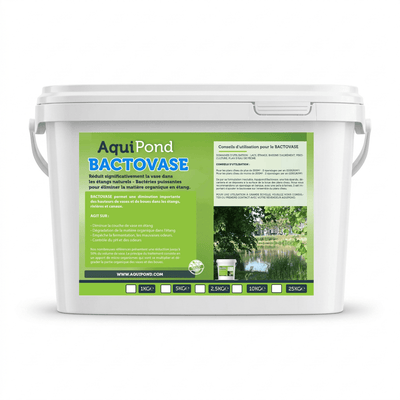 Aquipond Bactovase 2.5 kg – Bacteria to reduce pond sludge (12.5 to 25 m²)
€94,45
Voir le produit
 Aquipond Bactovase 5 kg – Bacteria to reduce pond sludge (25 to 50 m²)
€158,55
Voir le produit
À lire aussi
Tous les conseils Cyanobacteria: how to swim safely in a lake, pond, or natural swimming area
7 min de lecture
 Gorgeous pool in spring, tired by summer: why it deteriorates month after month
7 min de lecture
 Why algae always come back to the same spot in the pool (and what that spot is trying to tell you)
5 min de lecture
Leave a comment