


What are the best algae-eating fish for my outdoor pond?
In short: in a garden pond in France or Belgium, no single fish can solve an algae problem. Goldfish and koi carp graze on some algae, the common carp (grass carp) much more, but it eats plants first and its introduction is regulated in France. What brings clear water is rebalancing the pond: fewer nutrients, suitable filtration, plants, and a UV-C clarifier in case of green water.
Are you looking for algae-eating fish for your outdoor pond? What algae-eating fish are suitable for my outdoor pond?

Not all fish are algae eaters: some are carnivores and others simply do not like algae. Today, we are going to focus on the best species of algae-eating fish! This way, you will know which species to select to give your outdoor pond a major cleanup.
Update from our experts: several species often cited as "algae eaters" are not suitable for a garden pond in France or Belgium. The Ancistrus, Molly, Farlowella and blacknose pleco are tropical aquarium fish: they do not survive the winter outdoors. The introduction of common carp (grass carp) is regulated in France, and the channel catfish is not an herbivorous fish. Never release a pond or aquarium fish into the wild. We have corrected the relevant passages below.
80 cm to 1 mdeep zone recommended for goldfish
≈ 10 m³minimum volume we recommend for koi
4 specieslisted here are tropical: reserved for aquariums
0 fishcan solve an algae problem alone
1. Koi carp
The famous koi carp is a magnificent aquatic species that can live for several decades and, for some individuals, approach one meter. Straight from Japan, the koi carp readily grazes on some algae. But what it loves above all else is to make friends with humans. Koi carp make excellent pets, but they do not clean the pond: they produce a lot of waste.
These fish need a lot of space to move around, as they commonly exceed 60 cm at adulthood and can weigh several kilos. That said, you can very well raise these species in captivity. Most of the time, koi carp get along well with other fish, even though they can become aggressive during the breeding season.
2. Ancistrus
The Ancistrus is a tropical freshwater fish originating from South America. It comes in many colors and has a reputation for being a tile washer. And for good reason: they are often seen clinging to roots, rocks, and glass in an aquarium. That said, this fish prefers darkness to light. It will be mainly active at night.
However, it is a tropical fish that cannot tolerate cold water: it is not suitable for an outdoor pond at our latitudes, only for a heated aquarium. In addition, these little tropical fish can coexist with Amazonian Tetras and Cichlids. However, there can be friction with Corydoras and shrimp.
3. Blacknose pleco
The blacknose pleco loves algae so much that it is nicknamed "the algae eater"! This fish originating from the tropical waters of Asia is an aquarium fish: it does not survive the winter in an outdoor pond at our latitudes, and it can reach a size of over 15 centimeters. Its sucker-shaped mouth clings to rocks, plants, and pond walls to clean them. In addition, it is particularly effective at sucking up black algae.
Important: these fish can be aggressive, so check their compatibility with other fish before placing them together.
4. Common carp
The common carp or herbivorous carp is a real glutton when it comes to eating algae. Of course, it is also huge (50 to 90 cm on average). Thus, it can only be considered in large ponds, and its introduction is regulated in France: check with the state services of your department (DDT or DDTM) before any project.
The herbivorous carp eats between 40 and 300% of its weight in vegetation every day. It loves pond grasses, but it also swallows all the algae lying around. However, it primarily consumes aquatic plants, at the risk of devastating plantations: this is not a fish suitable for a garden pond.
5. Channel catfish
The channel catfish is the most common catfish in North America. It is also reserved for large ponds or outdoor ponds. But unlike the common carp, the channel catfish is an omnivorous catfish with a carnivorous tendency: it does not consume algae significantly and can attack the small fish in the pond. It has a very developed sense of smell that helps it find its food.
6. Barramundi
The barramundi is above all a bottom digger, which feeds on debris and small invertebrates more than algae, and has the specificity of being able to breathe the air it swallows at the surface. This fish gets along very well with other species such as koi and mosquito fish. That said, barramundis tend to be a little shy. They do not swim to be seen.
Good to know: this fish can reach over thirty centimeters in length at adulthood.
7. Molly
Another brown algae eater is the Molly fish. These popular aquarium pets are hardy, but they are tropical fish: they cannot tolerate cold water and cannot live all year round in an outdoor pond at our latitudes. It is a species that collaborates perfectly with other algae-eating fish. Be careful, however, the Molly needs enough space to feel comfortable. Opt for a tank of at least 200 liters if you wish to welcome this type of fish.
8. Farlowella vittata
This atypical fish is known for its long, slender body and pointed nose. It generally reaches a maximum adult size of about 16 centimeters. This tropical species thrives in a heated aquarium, in a minimum volume of 240 liters, and needs water with a stable balance: it is not suitable for an outdoor pond.
Although they love to devour the algae present on roots, plants, substrates, or glass, it can quickly change location if danger is felt.
So, which algae-eating fish will you welcome into your outdoor pond?

Are you interested in one of these 8 fish species? Then, find out about the behavior, size, needs, and breeding method of the species. It is important not to make this choice lightly, because most algae-eating fish have very long life expectancies.
What fish for an outdoor pond in France or Belgium?
At our latitudes, a pond fish must tolerate water close to 4°C at the bottom for several weeks in winter, then warm and less oxygenated water in summer. Tropical aquarium fish do not have this tolerance. Among the species mentioned above, only koi carp, goldfish, and barramundi are commonly kept all year round in a garden pond, provided that the volume and depth are sufficient.
To go further in the choice of species, consult our article what fish for my outdoor pond. And if you are looking for a discreet helper against algae, native freshwater snails are often a better lead: see our guide on algae-eating snails for ponds.
Rebalance the water in your pond
Fish help, but clear water long-term relies on filtration, light, and nutrients.
Why fish are not enough against algae
A fish that grazes on a few filaments does not change the underlying equation: algae proliferate when they find light and nutrients. However, every fish produces waste, and every uneaten pellet decomposes. The more populated and fed the pond is, the more nitrates and phosphates it releases. This is why adding "cleaning" fish often worsens the problem instead of reducing it.
- Distribute an amount of food consumed in a few minutes, and adapt it to the water temperature.
- Size the filtration based on the fish load, not just the volume.
- Plant a part of the pond with oxygenating plants that consume the same nutrients as algae.
- Remove filamentous algae by hand before they decompose: our guide on filamentous algae details the method.
Quality food, well dosed, is more useful against algae than any "algae-eating" fish. In addition, a maintenance solution that deprives algae of nutrients helps the pond regain its balance, without replacing filtration or plants.
Aquifood Pond Fish Food Mix – Goldfish 3 mmFloating pellets for goldfish: you can see what is eaten and remove the surplus.See the product →Aquipond GreenstabNatural maintenance solution that limits the development of algae by acting on nutrients.See the product →
To accompany this rebalancing, three levers according to your pond:
Aquifood Biotope2 mm pellets, floating and semi-sinking, for small native fish (minnows, loaches, minnows): an adapted ration, so fewer leftovers that feed algae.See the product →Aquipond Bacto MaintenanceMaintenance bacteria that reduce organic matter and excess nutrients. Turn off the UV during bacterial treatment.See the product →UV-C ClarifiersIn case of green water, the UV-C placed before the filter helps to regain clear water. Size according to the volume of the pond.See UV devices →
Volume and depth: the guidelines before adding fish
These are the questions you ask us most often in the comments. The values below are rough estimates commonly recommended in aquatic gardening for a climate like that of Northern France or Belgium, not regulatory thresholds.
| Fish | Volume (rough estimate) | Deep zone |
|---|---|---|
| Goldfish, shubunkins | from a few m³ | about 80 cm to 1 m |
| Barramundis | with other fish, a few m³ | about 80 cm to 1 m |
| Koi carp | about 10 m³ minimum | about 1.2 to 1.5 m |
For koi, our article what size of pond for koi carp details these guidelines, and the number of fish not to exceed is explained in the quantity of fish to respect in a pond.
Goldfish reproduce easily: a small group can become an overpopulated population in a few seasons. Overpopulation is one of the first causes of green water and filamentous algae.
Need more advice on the maintenance of your outdoor pond? Quickly discover how to prevent your birdbath from freezing.
Your frequently asked questions about algae-eating fish
What fish really eats algae in a garden pond?
None is enough alone. Goldfish and koi graze on some soft algae; common carp consumes much more, but it eats plants first, becomes very large, and its introduction is regulated in France. The aquarium species often cited (Ancistrus, Molly...) do not survive the winter outdoors.
Is a UV needed if the pond water is green?
Green water comes from suspended algae. A UV-C clarifier adapted to the volume helps to regain clear water, but it does not remove the cause: also reduce food and nutrients, and check filtration and plants.
My pond is about 1,000 liters: what algae-eating fish can I put in it?
No fish will solve the algae in a pond of this size. Koi are excluded: we recommend about 10 m³ minimum. A few small goldfish can live there if the depth allows them to survive the winter, but they will add nutrients rather than remove them. Bet on plants, well dosed food, and maintenance.
What depth is needed for fish to survive the winter outdoors?
Roughly, a zone of at least 80 cm to 1 m for goldfish, and about 1.2 to 1.5 m for koi, under a climate like that of Northern France or Belgium. This deep zone remains frost-free in winter and cooler in summer.
Do goldfish eat algae?
A little: they nibble on soft filaments and young plant shoots, but they are omnivores that feed mainly on what we give them. Overfed or too numerous, they on the contrary favor algae. Give an amount consumed in a few minutes and monitor their reproduction.
Do koi carp clean the pond?
No. They root around the bottom and graze on some algae, but they produce a lot of waste and often pull up plants. A koi pond requires powerful filtration, aeration, and controlled feeding. Also see why koi eat plants and water lilies.
Can I put an Ancistrus or a Molly in my pond during the summer?
We advise against it. They are tropical fish: cool nights and temperature fluctuations in an outdoor pond weaken them, and they do not survive the winter outdoors. Keep them in a heated aquarium and never release them into the wild.
Can I put a common carp in a garden pond?
It is not suitable. In France, the introduction of common carp (grass carp) is regulated: check with the state services of your department. It becomes very large and consumes aquatic plants first, before algae.
How many fish can I put in my pond?
It depends on the volume, filtration, and species. The golden rule is moderation: a sparsely populated pond remains clearer and more stable. Our density guidelines are detailed in our article on the quantity of fish to respect in a pond.
Les produits conseillés par nos experts
Voir toute la sélection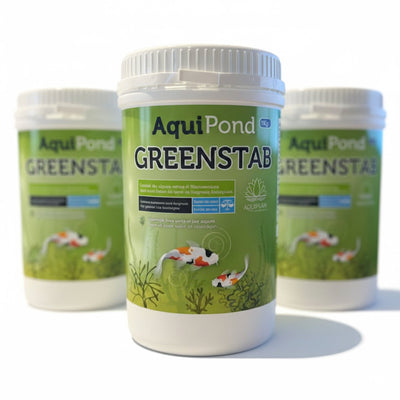 Aquipond Greenstab - Balanced pond water, limits algae
À partir de €34,95
 Aquifood Pond Fish Food Mix - Goldfish Floating - 3MM - 900G
€15,95
Voir le produit
 Aquaoxy 500 - Complete aeration kit for ponds from 0 to 5m³ - Oase
€63,95
Voir le produit
 Sera Aqua-Test Set - The essential analysis kit for ponds and aquariums
€34,61


Comments
Leave a comment