Pond clay can contribute to water clarity, mineral content, and the maintenance routine of koi ponds. It remains a supplement: filtration, oxygenation, maintenance, and water analysis are still the foundations of a stable pond.
Pond Clay: Benefits, Selection, and How to Use It
This guide helps you choose clay according to your actual needs: cloudy water, depleted minerals, regular maintenance, or the pursuit of greater comfort for koi.
— Clay at a Glance
- It can contribute to the clarity of water loaded with fine particles.
- It provides additional minerals to the environment.
- It does not replace filtration, oxygenation, or water testing.
What Is Pond Clay?
Pond clay is a mineral material selected for its fineness, purity, and aquatic use. Clay specifically intended for ponds disperses more evenly and is a safer choice than generic clay, especially when fish are present.
— Why Is Montmorillonite Sought After?
Montmorillonite is valued for its fine texture and mineral richness. Its particles can bind certain suspended materials, helping make the water clearer when the filtration system is working properly.
The goal is gradual support for the overall quality of the water, not an instant transformation of the pond.

— Clay Does Not Replace Pond Balance
Clay cannot compensate for inadequate filtration, too many fish, poor oxygenation, or accumulated waste. A stable pond is built first and foremost on its fundamentals.
What benefits can you expect from clay in a pond?
Clay mainly acts as a support: it can contribute to water clarity, mineral content, and the overall quality of the environment, without replacing essential equipment.
— Clarifying Water Loaded with Fine Particles
Clay can help fine particles aggregate so that some of them are captured more easily by filtration. Slight temporary cloudiness after application may be normal.
Persistent green water or significant sludge nevertheless requires an additional diagnosis: nutrients, filtration, UV, circulation, and organic waste must be checked.
— Support the pond’s mineral supply
Rainfall and water changes can alter the available minerals. Clay can complement a remineralization process, but it does not replace checking GH, KH, and pH.
— Support koi well-being
In a properly managed pond, clay can support water quality and the overall comfort of koi. Results remain linked to the entire maintenance routine: feeding, water, and oxygenation.
Before using clay in your pond
Before adding anything, make sure the pond is stable enough. Clay complements maintenance but should not conceal a filtration or water-quality problem.
— Check water stability
If in doubt, check pH, GH, KH, nitrites, and nitrates. A test helps you choose a consistent course of action, rather than combining several products without a diagnosis.
— Identify the pond’s real problem
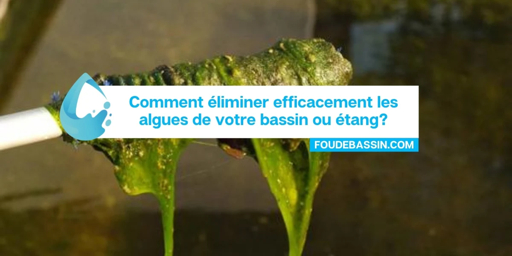
Algae on the walls or bottom can be natural. Rapid growth, persistent green water, or unusual fish behavior calls for a more thorough analysis.
Reducing food and removing waste is often more useful than randomly adding a product. A new pond may also need a full season to stabilize.
— Preparing the right application conditions
Keep filtration and aeration running unless otherwise indicated by the manufacturer. Do not automatically turn off filtration for 24 hours: each product has its own instructions for use.
For ponds with sturgeon, use a product intended for ponds, follow the dosage, and distribute the application gradually. For a delicate pond, start with a cautious application in accordance with the instructions.
How do you choose the right clay for your pond?
The right product depends on the actual need: water clarity, koi routine, mineral supplementation, or regular maintenance. The choice should remain consistent with the pond volume and filtration system.
— Purity, fineness, or enriched formula?
Fine clay disperses more easily. A pure formula focuses on montmorillonite, while an enriched formula may combine minerals, zeolite, or bacteria. Prioritize the intended use over an overly broad promise.

Which clay should you choose for your koi pond?
The following solutions address different priorities. Always consult the instructions and adapt usage to the pond's actual volume.
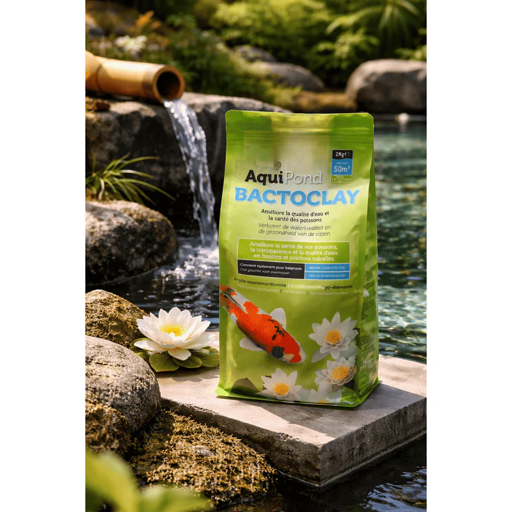
Aquipond BactoClay
To support a regular maintenance routine, mineral supplementation, and overall water quality.
VIEW BACTOCLAY
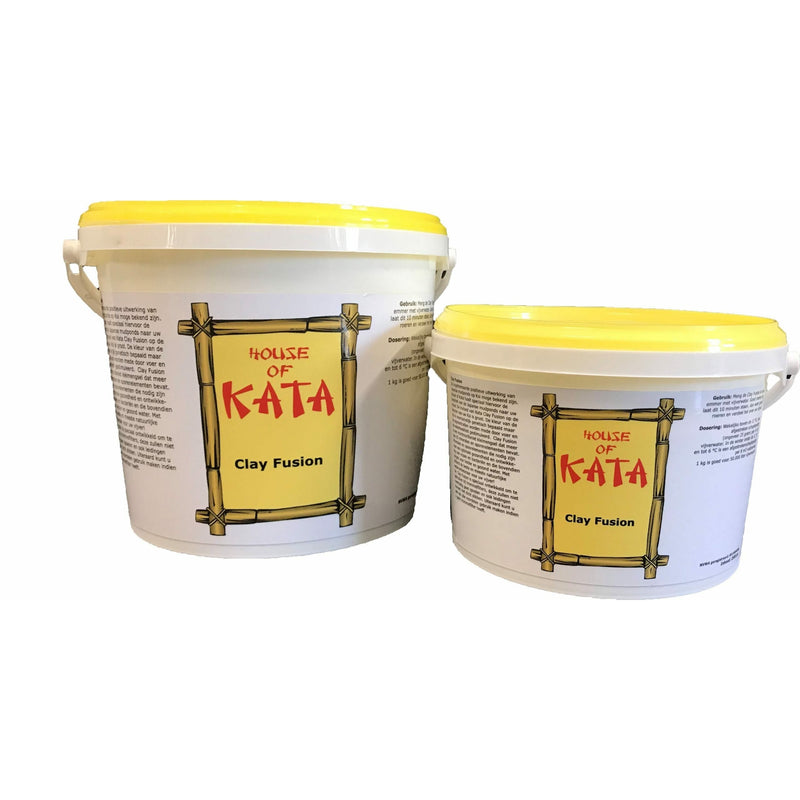
House of Kata Fusion Clay
An alternative focused on mineral supplementation and the overall balance of a koi pond.
VIEW FUSION CLAY
Ohmizu Clay
For water-clarification needs, with a formula combining minerals, zeolite, and bacteria.
VIEW OHMIZU CLAY
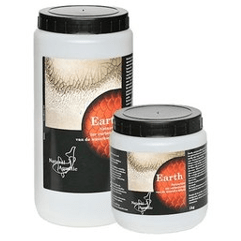
Biota Earth
For a routine more focused on koi: mineral supplementation, color, and overall water quality.
VIEW BIOTA EARTH
| Priority |
Solution |
Alternative |
Attention |
| Regular maintenance |
BactoClay |
Fusion Clay |
Follow the dosage |
| Clearer water |
Ohmizu Clay |
Biota Earth |
Temporary cloudiness possible |
| Koi routine |
Biota Earth |
BactoClay |
Does not replace feeding |
| Mineral supplement |
Fusion Clay |
BactoClay |
Test the water in parallel |
How to use clay in a pond
Dosage and frequency are not universal. Each formula has its own concentration and instructions for use. The manufacturer’s instructions remain the reference.
— Follow each product’s dosage
Do not transfer the dosage from one clay product to another. Calculate the pond’s actual volume, follow the manufacturer’s recommendation, and observe how the water changes.
Avoid overdosing and mixing treatments without a clear reason. Gradual application makes it easier to monitor the pond’s response.
— How to prepare and distribute clay correctly
Depending on the instructions, clay can be diluted in a bucket or distributed directly over the surface. In large volumes, apply it at several points to promote even distribution.
Keep filtration and aeration running unless otherwise specified. Temporarily milky water is not necessarily abnormal.
Frequently asked questions about pond clay
— Is clay compatible with sturgeons?
Choose a clay formulated for ponds, follow the dosage, and proceed gradually. In a fragile or heavily stocked pond, caution remains essential.
— Is clay enough to combat algae?
No. Clay complements maintenance, but does not replace correcting excess nutrients, insufficient filtration, or organic overload.
— Should filtration be stopped?
As a general rule, filtration should continue running. However, follow the instructions, especially for formulas containing bacteria or specific components.
Conclusion
Clay is most useful when it meets a specific need: helping manage nutrient-rich water, supplementing mineral intake, or supporting a maintenance routine for a koi pond. It should be chosen for its actual purpose, not as a universal solution.



Comments
Leave a comment