


The Foudebassin.com team
Published
7 min read
The benefits of ponds for biodiversity
A pond offers much more than a landscape: it provides breeding grounds, food resources, and refuges for many species. Its ecological value depends on the quality of the water, its banks, and the habitats that surround it. From small garden ponds to large nature reserves, preserving this diversity helps support aquatic and terrestrial biodiversity.
Why does a pond promote biodiversity?
A pond promotes biodiversity because it brings together several complementary environments in the same location: open water, submerged vegetation, shallow edges, and damp soils. Some species spend their entire lives there, while others come to breed, drink, or find food. This variety of uses explains why a living body of water is never limited to the fish visible from the bank.
Below the surface, dragonfly larvae live alongside beetles and other invertebrates. Frogs and newts use the water for part of their life cycle. Birds may come to drink, bathe, or feed: the site's appeal therefore extends far beyond its aquatic boundaries.
This richness also rests on food relationships. Small organisms feed predators, which are themselves part of a larger system. To accommodate this life, it is better to preserve hiding places and vegetated areas than to create a completely open pond where every leaf is removed.
Refuges connected to the surrounding landscape
A pond takes on another dimension when viewed at the landscape scale. Together with marshes, wet meadows, and other bodies of water, it can form a network of refuges used by different species. The French Biodiversity Agency highlights the importance of these environments as habitats and as links between freshwater areas.
Continuity is not only a matter of water. A frog leaving its breeding site needs terrestrial shelter; tall grasses and damp areas can facilitate its movements. Protecting the area around the pond is therefore just as important as carefully designing its interior.
In practice, avoid turning all the edges into short lawn. Instead, maintain a transition between the water, low vegetation, and denser refuges nearby. A pile of wood placed in a damp spot can complete this setup without requiring any special equipment.
Aquatic plants, a living architecture
Aquatic plants do not just serve to beautify a pond. They create shelter, resting supports, and passages between the water and the banks. Their presence diversifies the habitat: an emergent stem, floating foliage, and submerged vegetation do not fulfill exactly the same functions.
To create useful vegetation, think in terms of zones rather than just decorative effect:
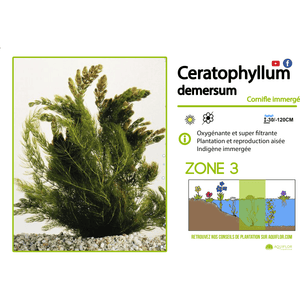
- In the water, submerged plants provide refuges and help oxygenate the water through photosynthesis.
- On the surface, some floating foliage provides cover while leaving openings for light.
- Along the margins, emergent plants structure the edges and multiply supports accessible to wildlife.
- Around the pond, terrestrial vegetation complements the shelter available out of the water.

Choose native species adapted to your region and the site's conditions. Before buying, check their botanical identity and expected growth: a plant that looks attractive in a garden center can become invasive or grow far beyond the space provided. Ask a knowledgeable supplier for advice rather than choosing solely based on the flowers.
The goal is not to freeze the vegetation. Observe its growth, then intervene if one species eliminates all others or closes off the spaces you wish to preserve. Gradual management avoids abruptly removing refuges occupied by animals.
How to create a truly welcoming pond?
A welcoming pond combines low-nutrient water, accessible banks, and varying depths. The priority is not to dig as deep as possible, but to create spaces usable by several species. Even a small setup can be beneficial if animals can enter and leave it easily.
Before starting, consider these four points:
- The location. Keep a sunny area, without necessarily seeking uniform exposure all day.
- Access. Plan for a gentle slope; in a container or a pond with steep walls, add a stable ramp.
- The surroundings. Avoid areas that receive runoff from fertilized lawns or enriched flower beds.
- Water supply. Plan ahead for rainwater collection for filling and occasional top-ups.
If the ground does not naturally retain water, a pond liner can provide waterproofing. Its installation must respect the profile of the banks and shelves, with a prepared base and suitable protection beneath the membrane. Waterproofing remains a technical means: it does not replace access for wildlife or good-quality water.

Equipment to choose based on the ecological goal
Not all accessories sold for ponds are essential for an environment that supports biodiversity. Before equipping yourself, distinguish a pond intended for fish from a body of water dedicated to spontaneous wildlife. Maintenance needs and technical choices will not be the same.
In a wild pond without fish, a pond filter is not essential: plants and a good balance are often enough. As soon as you welcome fish, or if your pond receives a lot of nutrients, a properly sized filter becomes the best ally for healthy water, for fish as well as the rest of the wildlife. Choose a pump whose intake is protected by a screen or pre-filter so as not to suck in tadpoles and small invertebrates.
The pond net remains the simplest solution to prevent dead leaves from falling into the water in autumn and to protect fish from herons. On a pond frequented by amphibians, place it taut, a few centimeters above the water, and check it regularly: a loose net can trap frogs, newts, or birds. Remove it at the end of leaf fall and supplement with a skimmer to remove occasional accumulations, without trying to remove every leaf.
Finally, avoid introducing fish into a small pond created primarily for amphibians and invertebrates. Their predation can reduce the populations you are trying to welcome. If you already have a fish pond, creating a second body of water without fish is an option to consider.
The Virelles Pond, an example of habitat diversity
Located in Chimay, Belgium, the Virelles Pond illustrates the importance of preserving a collection of environments rather than a simple body of water. Natagora describes a site combining a body of water, reed beds, damp woodlands, and meadows. This mosaic explains much of its appeal to wildlife and plants.
Aquatic plant beds there serve notably as nesting supports for dragonflies, while reed beds welcome many birds. The gently sloping banks and shallow depth also contribute to the quality of the habitats. The lesson can be applied on a smaller scale: multiplying useful transitions is better than a uniform design.
To discover this type of richness, choose an observation outing rather than an activity incompatible with the tranquility sought.
Maintaining without erasing established life
Maintenance that supports biodiversity consists mainly of intervening with discernment. A natural pond does not need to be completely emptied and cleaned every year. Excessive interventions can disrupt its balance and remove the habitats you wished to protect.
Adopt a few simple guidelines:
- Observe before cutting. Identify occupied areas and limit each intervention to one part of the pond.
- Remove only bothersome excesses. A few leaves or withered plants do not justify a complete cleaning.
- Keep refuges intact. If sediment removal becomes essential, proceed in sections.
- Let animals come. Do not bring tadpoles or newts from another pond: these movements can spread diseases.
Protecting a pond ultimately means preserving living conditions rather than pursuing a perfect appearance. Start by looking at its banks, its plants, and the spaces that surround it. Improved access or a less radical intervention can already make your management more respectful of living things.
Also read
Sources: French Biodiversity Agency; Natural History Museum; Royal Horticultural Society (aquatic habitats, pond plants, ponds for wildlife); Freshwater Habitats Trust; Natagora, Virelles Reserve.
Produits et rayons conseillés


Products recommended by our experts
See the full selection Aquipond BactoClay - Montmorillonite clay 2 kg for koi ponds
€39,95
View product
 Minerall in One Aquipond - Increases GH & KH simultaneously - 2.5KG to treat 30M³
€49,00
View product
 Sera Aqua-Test Set - The essential analysis kit for ponds and aquariums
€34,61
 Aquipond KH+ 1kg - Increases Carbonate Hardness (KH)
€19,95
Read also
All our tips Wasps and bees drinking from the pond: should we worry or rejoice?
Updated November 24, 20266 min read
 No more slugs in the garden? How a pond attracts toads and frogs, their natural predators
Updated November 24, 20267 min read
 Toads: why they return to lay eggs in the same pond every spring (and sometimes travel for miles to do it)
Updated November 24, 20267 min read
Leave a comment