


The Foudebassin.com team
Published
7 min read
Does a pond attract rats? The real causes and how to prevent them
One evening, a silhouette slips along the bank and dives under the rocks of the waterfall. A rat. Is the pond to blame? In reality, rats come first for what they find to eat and for shelter: Brussels Environment reminds us that feeding animals in parks and gardens inevitably attracts rats. Water matters less than food and shelter.
The essentials
- A pond does not attract rats by itself: it is mainly accessible food and hiding places that bring them.
- Food sources to watch out for: fish pellets, bird feeder seeds, compost, bread thrown into the water.
- The brown rat can transmit leptospirosis through its urine: a few simple steps limit the risk when maintaining the pond.
- Readily available rodenticides can poison other animals. In the event of a real infestation, call a professional.
5 sources of food and shelter to watch out for
5 to 14 days before the first signs of leptospirosis
25 cm length of a brown rat, excluding the tail
2 aquatic rodents on the European list: coypu and muskrat
What really attracts them
- Fish food: excess pellets that float or sink, food bag stored in the garden shed.
- Bird feeders and seeds fallen on the ground.
- Compost with kitchen scraps.
- Hiding places: hollow rockeries, wood piles, under the patio, the void under a waterfall.
- Bread thrown to the fish or ducks. See how to properly feed your fish.
The brown rat is omnivorous and particularly likes cereals, according to Brussels Environment: pellets and seeds are therefore very suitable for it. It also likes damp places, which can explain why you may encounter it by the water.
The risks
The brown rat can transmit leptospirosis through its urine: in France, the main source of contamination is contact with fresh water contaminated by the urine of wild rodents, such as rats and coypus (Santé.fr). Wear gloves when maintaining the pond, and do not let children or dogs play in water frequented by rats.
Leptospirosis: the right steps at the pond
The bacteria enters through a wound, even tiny, or through the mucous membranes (eyes, mouth, nose). The first signs resemble the flu and generally appear 5 to 14 days after exposure, sometimes up to 21 days; some forms are serious (Santé.fr). According to these recommendations:
- wear waterproof gloves to dip your hands into the pond, clean a filter, or remove sludge;
- avoid any contact of water with a cut or abrasion;
- after contact with water or soil, rinse a wound with drinking water and disinfect it;
- in case of fever, headaches, or muscle pain in the following weeks, consult a doctor and tell them about this contact with water frequented by rodents.
And the dog?
The dog can also contract leptospirosis, especially if it lives in the countryside or near water. Lethargy, vomiting, and loss of appetite should be cause for concern, and a specific vaccine exists: talk to your veterinarian (Santé.fr).
The dog can also contract leptospirosis, especially if it lives in the countryside or near water. Lethargy, vomiting, and loss of appetite should be cause for concern, and a specific vaccine exists: talk to your veterinarian (Santé.fr).
 Long waterproof pond gloves L/XLCover the hand and forearm for pond and filter maintenance.View the product
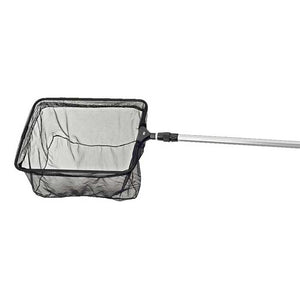
 Fine Fish net M 180 cm – SuperfishFine mesh and long handle to remove pellets that the fish have not eaten.View the product
The solutions
- Feed the fish in small quantities, what they eat in a few minutes, and remove the excess.
- Store food in a closed metal or hard plastic container.
- Place feeders away from the pond and on a collection tray.
- Close the compost and put only raw vegetable waste in it.
- Fill the cavities under the slabs and waterfalls.
- For a real infestation, call a professional pest control service. Avoid readily available poisons: anticoagulants accumulate in the rodent, so that its predators, wild as domestic, can be poisoned in turn, and children or other animals can touch or swallow the bait (Swiss Federal Office of Public Health).
The same office recommends starting any rodent control by removing food sources and sealing openings, and prefers, for a small infestation, non-poison traps. For the pace of your fish meals, see when to feed pond fish.
If you leave for a few days, prefer a well-adjusted automatic feeder to a large ration poured all at once: the fish receive small portions, and there are fewer pellets within reach of rodents.
Rat or coypu?
A large rodent swimming with its head out of the water, by the edge of the pond, is probably a coypu or a muskrat. Their management is different.
These two species are on the European list of invasive alien species of concern (Implementing Regulation 2016/1141), which applies in France as in Wallonia. Our guide Coypu or muskrat: recognize and protect your banks details how to distinguish them and limit their damage.
| Criterion | Brown rat | Muskrat |
|---|---|---|
| Appearance | Gray-brown, about 25 cm, scaly tail almost as long | Looks like a small beaver |
| Diet | Omnivore, fond of cereals | Vegetarian |
| Environment | Sewers, cellars, gardens, damp places | Aquatic environment, does not frequent sewers |
| Status | Naturalized species, very common | European list of invasive alien species |
Any doubt about a rodent or about the maintenance of your pond?
Describe the situation to us: we will help you choose the right maintenance equipment.
Frequently asked questions
Can a rat eat my fish?
The brown rat is omnivorous (Brussels Environment): a small fish near the edge is therefore not safe. However, it is mainly the distributed food that attracts it.
Does a pond without fish attract rats?
No more than any other body of water. It is the food and shelter that matter.
Is leptospirosis a risk at the pond?
Yes, if rats frequent the pond: the bacteria passes into their urine and is transmitted mainly by contact with contaminated fresh water. Wear waterproof gloves and avoid contact of water with a wound. In case of fever, headaches, or muscle pain after contact, consult a doctor.
Should I put rodenticide around the pond?
It is better to avoid it: anticoagulants can poison rodent predators, wild as domestic, and the bait can be touched or swallowed by children or other animals. First remove the food and hiding places, and call a professional in case of a real infestation.
And you?
Have you already had rats around the pond? What worked for you?
Also read: Coypu or muskrat: recognize and protect your banks, How to properly feed pond fish and Choosing a fish feeder.
Produits et rayons conseillés


Products recommended by our experts
See the full selection Aquipond BactoClay - Montmorillonite clay 2 kg for koi ponds
€39,95
View product
 Minerall in One Aquipond - Increases GH & KH simultaneously - 2.5KG to treat 30M³
€49,00
View product
 Sera Aqua-Test Set - The essential analysis kit for ponds and aquariums
€34,61
 Aquipond KH+ 1kg - Increases Carbonate Hardness (KH)
€19,95
Read also
All our tips Wasps and bees drinking from the pond: should we worry or rejoice?
Updated November 24, 20266 min read
 No more slugs in the garden? How a pond attracts toads and frogs, their natural predators
Updated November 24, 20267 min read
 Crayfish in your pond: a good idea or a disaster? What no one tells you before adding them
Updated November 24, 20266 min read
Leave a comment