


When is the best time to clean sludge from the bottom of a fish pond?
In a pond without fish, you can remove sludge more or less whenever you want. As soon as there are koi, goldfish, or sturgeons, they determine the schedule. Sludge is a store of decomposing organic matter: disturbing it releases particles, ammonium, and a high oxygen demand all at once. The right time to clean the bottom is when the water is cool enough to retain oxygen in reserve, yet warm enough for the fish to cope with the disturbance. In practice, this leaves two windows each year.
— The short answer
The best time is early autumn, when the water cools to around 12 to 16°C (in Belgium, generally from late September to late October): remove the summer sludge before it rots throughout the winter beneath the fish. The second window is spring, when the water remains above about 10°C and the fish have regained their appetite. Avoid hot spells, cold winter water, and the spawning period.

Why water temperature determines everything
Two mechanisms work in opposite directions. On the one hand, the warmer the water, the less oxygen it can dissolve, while fish and bacteria consume more of it. Water quality management manuals for fish farming, such as Boyd and Tucker's, clearly show this scissor effect: in summer, the margin is small, and any additional demand can tip the pond into trouble. On the other hand, fish are animals whose metabolism follows the temperature. In cold water, their immune defenses slow down, as fish pathology books remind us: stress in winter or very early spring takes longer to recover from and opens the door to infections.
Sludge adds a third factor. At the bottom, in oxygen-free layers, decomposition produces reduced compounds, sometimes gases with a rotten-egg smell. As long as the sludge remains in place, they escape slowly. When it is disturbed, they enter the water all at once. The right time is therefore when the water has some reserve and the fish have enough resources.
The calendar at a glance
| Period | Water (approximate range) | Verdict |
|---|---|---|
| Late September to late October | 12 to 16°C | Ideal: summer sludge removed before winter, fish still active |
| April to early May | Above 10 to 12°C and rising | Good: removes what has settled during the winter |
| Late spring | Around 18 to 20°C | Avoid if the fish are spawning: eggs and fry may be vacuumed up |
| July and August | Above 22 to 24 °C | Avoid: oxygen levels at their lowest |
| November to March | Below 8 to 10 °C | Avoid: sluggish fish at the bottom, where the sludge is |
These temperatures are approximate. A very shady or very deep pond may shift the dates, as may a mild year. The thermometer decides, not the calendar.
Why autumn almost always wins
At the end of summer, the bottom contains everything the season has produced: waste, leftover food, dead algae, and the first leaves. If left in place, this deposit will slowly decompose over five or six months, right beneath the fish that spend the winter near the bottom. Removing it in October gives them more stable water during the season when they are most vulnerable, and it also limits the nutrients that will feed algae in spring.
Vacuuming five centimeters of sludge in the middle of August suddenly adds a heavy oxygen demand to a pond that is already short of oxygen. Every summer, we receive calls from customers who found fish at the surface the day after a major cleaning carried out on a scorching Sunday. If the bottom is genuinely causing problems in July, limit yourself to a small area, early in the morning, with the aeration running at full power.
Clean without stressing the fish
There is no need to remove the fish for routine maintenance: they move away from the vacuum on their own. Work in sections, starting with the areas containing the most sludge, generally beneath the waterfall or at the lowest point. In a heavily silted pond, do two or three sessions spaced a week apart rather than one marathon day. A vacuum discharges some of the water along with the sludge: this is a partial water change, which should be topped up gradually. If you add tap water, do so slowly and use a water conditioner if your water supplier treats it with chlorine. The next day, an ammonium and nitrite test will tell you whether the filter has coped.
Pondovac 4 – Oase
Two-chamber vacuum that vacuums and drains alternately, allowing you to work in sections without interruption. Live pricing and add to cart:
Between cleanings: let the bacteria work
The vacuum removes the sludge that has already formed. To slow down the next buildup, we rely on bacteria that break down organic matter at the bottom. Their activity depends heavily on temperature: adding them in early autumn, when the water is still warm, is more likely to work than treating in December. Follow the manufacturer's dosage and do not turn off the aeration, as these bacteria need oxygen.
Aquipond Bactovase Liquid 1 L
Autumn bacteria that help break down organic matter at the bottom, alongside vacuuming. Live pricing and add to cart:
Signs that it is time, regardless of the date
- Bubbles rising when you poke the bottom with a stick, accompanied by a rotten egg smell.
- A soft layer several centimeters thick into which a handle sinks without resistance.
- Fish gasping at the surface at daybreak.
- Water that becomes cloudy again a few days after each filter cleaning.
If these signs appear in midsummer, start by increasing aeration and reducing feeding, then plan the actual cleaning as soon as the water cools.
Digital thermometer – Oase
To know exactly when the water enters the right cleaning window, without relying on the calendar. Live price and add to cart:

You may also like
Once you have chosen the date, the technique: How to vacuum sludge from a pond?.
READ THE ARTICLENot sure whether your pond can handle cleaning now? Give us the water temperature, volume, and number of fish: the Foudebassin team will help you choose the right time and the right vacuum.
Frequently asked questions
— Can sludge be vacuumed with the fish in the pond?
Yes, for routine maintenance. The fish move away from the vacuum. They only need to be removed for heavy dredging or complete draining.
— Is it absolutely necessary to clean the sludge before winter?
In a populated pond, it is strongly recommended: sludge left in place decomposes throughout winter right beneath the fish, in water where exchanges with the air are reduced.
— Why not clean the bottom in midsummer?
Because warm water contains little oxygen and stirred-up sludge consumes a lot of it. The risk of respiratory distress for the fish is real.
— How often should sludge be vacuumed from a koi pond?
As a rule of thumb, one thorough cleaning in autumn and a follow-up in spring, with small touch-ups if an area gets dirty. A heavily stocked pond or one under trees requires more.
In summary
- Best period: early autumn, with water around 12 to 16 °C.
- Second window: spring, when the water stays above around ten degrees.
- Avoid: heatwaves, cold winter water, spawning season.
- Work in sections, over several sessions, and test the water the next day.
- The bacteria take over between cleanings, as long as the water is warm.
Sources and references
- Boyd C. E. et Tucker C. S., Pond Aquaculture Water Quality Management, Kluwer, 1998
- Noga E. J., Fish Disease: Diagnosis and Treatment, 2nd edition, Wiley-Blackwell, 2010
- Manufacturer technical sheets: Oase (Pondovac), Aquipond (Bactovase)
- Foudebassin consulting experience, Nodebais (Belgium)
Last updated: September 29, 2026.
Products recommended by our experts
See the full selection Aquipond Bactovase Liquide 1 L or 5 L - Anti-sludge bacteria for ponds
À partir de €39,00
View product
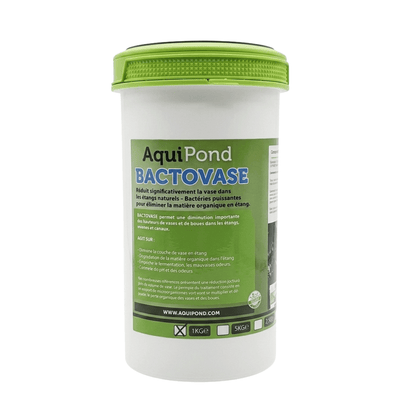 Aquipond Bactovase 1 kg – Bacteria for pond sludge reduction (5 to 10 m²)
€39,95
View product
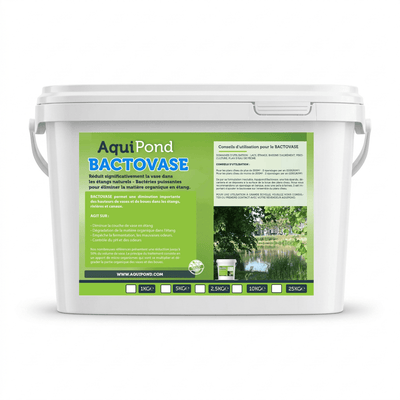 Aquipond Bactovase 2.5 kg – Bacteria to reduce pond sludge (12.5 to 25 m²)
€89,95
View product
 Aquipond Bactovase 5 kg – Bacteria to reduce pond sludge (25 to 50 m²)
€151,00
View product


Leave a comment