The Foudebassin.com team
Published Updated
15 min read
Cyanobacteria in ponds: how to identify and eliminate them
How to reduce cyanobacteria in a pond? How to control them? Have you just come across this article because you have seen cyanobacteria appear in your pond? They can be found in lakes and ponds. These algae can be dangerous to the aquatic flora and fauna in your pond.
Don't panic, we can help you with natural solutions to control them very quickly. We recommend that you do not use chemical products.
With climate change and increasingly hot summers in France and Belgium, more and more of you are contacting us to reduce cyanobacteria or algae in your pond. This is obviously the case in other countries.
Large quantities of these cyanobacteria in a body of water can even be toxic to humans. It is strongly advised, if not prohibited, to swim when cyanobacteria are present. Globally, we are all experiencing the effects of global warming.
Blue-green algaeanother common name for cyanobacteria
No swimmingas long as a bloom is visible
Dogsshould be kept away from the water
2 factorsoxygen and nutrients
This article helps you recognise blue-green algae and react quickly, with simple steps. To understand in detail why they appear (oxygen, sludge, heatwaves), read further down why oxygen, sludge and heat sustain blue-green algae. For a step-by-step plan to restore a large body of water, see our action plan to restore the pond for the long term.
What are cyanobacteria?
Also known as blue-green algae or black algae, these algae are part of the phytoplankton, aquatic organisms that function through photosynthesis. In the presence of large quantities of phosphorus, these algae will grow very quickly and the cells will multiply at breakneck speed.
So, how to reduce them? We will explain everything in this article, especially how to prevent these algae from returning and invading your pond later.

How to identify cyanobacteria?
Below, discover a photo of cyanobacteria. It looks like pea soup in a pond. Over time, they can turn blue or black and develop a fresh or freshly cut grass smell.

As its life cycle progresses, the growth becomes denser and can take on shades of yellow, white, and eventually turquoise blue.
These algal blooms look like a thick, foamy layer and resemble paint on the surface of the water.
The stick test to clear up any doubt
Green water is not necessarily synonymous with blue-green algae. Before taking action, a simple step can help make an initial distinction between filamentous algae, which are generally harmless, and a bloom suspected of being cyanobacteria.
- Water colored bright green, blue-green, or brownish, like diluted paint
- Foam or patches accumulating on the bank on the leeward side
- Smell of cut grass or mold near the water
- Fish coming up to breathe at the surface early in the morning
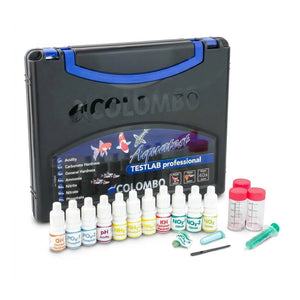
Several of these signs together warrant caution. To confirm the condition of the water, start by testing the water in your pond (pH, KH, nitrites, nitrates, phosphates).
Consequences of the presence of cyanobacteria in a pond
Planktonic blue-green algae can kill fish and are the most harmful form of aquatic growth encountered during periods of intense sunlight.
Are cyanobacteria dangerous?
Blue-green algal blooms that occur in lakes and ponds can be toxic to fish and wildlife.
Cyanobacteria blooms produce toxins that can kill fish and plants if ingested in large quantities. These algae can kill your fish by drastically lowering the oxygen level in your pond.
Health: caution first. No swimming, keep dogs and animals away, wear gloves for any intervention in the water, and wash your hands afterward. In case of symptoms after contact (irritation, nausea, headache), consult a doctor; for an animal, a veterinarian.
The right steps to take in the first 48 hours
Faced with a blue-green algal bloom, the goal is not to make the color disappear overnight, but to protect people and fish, then gradually deprive cyanobacteria of what feeds them.
- Secure access to the water. Prohibit swimming and keep dogs away as long as the water remains colored.
- Oxygenate without delay. Turn on the aeration or a water jet and leave it running at night, when oxygen is at its lowest.
- Reduce feeding. Significantly reduce fish food and stop feeding the ducks.
- Cut off nutrient inputs. No more mowing that falls into the water; divert lawn or walkway runoff if possible.
- Test the water. Measure at least pH, KH, nitrites, nitrates, and phosphates to know what to act on.
- Avoid "shock" treatments. A sudden disappearance releases toxins and consumes oxygen: favor biological and gradual solutions.
Why do I have cyanobacteria in my pond?
These cyanobacteria can grow when there are too many nutrients present in the pond water. Do you mow by the edge of your pond and the grass clippings fall directly into it? You will enrich your pond with phosphorus and feed these cyanobacteria.
It is also recommended to plant native trees along the edges of your pond and avoid mowing too frequently. Paved walkways and paths allow surface water to easily enter your pond, carrying pollutants and nutrients that feed the algae.
Does a stream cross your body of water? It is essential to add aquatic plants (discover them here) that you will place along the banks. These plants will help reduce the amount of nutrients present in the water because they will feed on phosphates, nitrates, and other nutrients that promote cyanobacteria in your pond.
These algae can also appear for other reasons:
- heatwaves
- drought
- too much fish food
- too much duck food
- overpopulation of ducks or fish
- eutrophication of a body of water
- invasive aquatic plants
These causes do not just add up: they reinforce each other. This is why effective solutions always combine oxygenation and nutrient reduction, rather than a single product.
For each of these causes, there are solutions to act quickly and limit the development of cyanobacteria in the pond. In parks, feeding ducks and birds can create a massive algal bloom. These small fragments, consumed but sometimes undigested, constitute an additional nutrient input in the pond.
This is why many parks have surface aerators to promote bacterial growth and limit organic pollution in the water.
How to treat cyanobacteria?
Is it possible to treat blue-green algae? Yes, it is possible with bacteria and products that help control algae. Be careful not to use shock chemical treatments. In fact, it is when cyanobacteria die that they release their toxins into the pond. On a large scale, these sudden algal disappearances can severely deplete oxygen levels.
We recommend using bacteria (such as clean-lac or biolimpid) that will strongly limit algal growth and using a suitable water jet or natural pond aeration system. By increasing oxygenation and water movement, you will greatly reduce the development of cyanobacteria. All these elements attack the cause rather than the symptoms of cyanobacteria.
If possible, consider installing a natural pond aeration solution before adding the bacteria (a few hours beforehand will be sufficient). Proper aeration will help move the water, increase oxygen levels, and reduce the presence of cyanobacteria.
To put this advice into practice, here are two solutions we use in natural ponds. To choose between bottom aeration and a surface aerator, read our bottom aeration or surface aerator comparison.
Aquipond Bactolake 1 kgHighly concentrated bacteria for natural ponds, in water-soluble sachets: they compete with algae for nutrients. Dosage and frequency on the product page.See product →OASE SubFlo Base 2 DBottom aeration for deep ponds (areas of 2 to 10 m): the bubbles promote circulation between the bottom and the surface.See product →
Discover all our bacteria and solutions for natural ponds.
Adding aquatic plants to your pond will help prevent the proliferation of algae in the pond. Avoid organic pollution in waterways by adding plants to the inlets of the waterway (bank).
Is it difficult for you to plant along the banks? Consider installing floating islands. Good management of your pond is the key to optimal water quality. A floating island with suitable aquatic plants will help reduce the amount of nutrients present in the water.
Other models are available in our selection of floating baskets and islands for ponds.
- Improve water quality
- Add aquatic plants
- Limit mowing around the pond
The roots of the plants growing on the floating islands increase the surface area where beneficial bacteria can grow massively, so that beneath the floating island is a large population of bacteria that assimilate phosphorus and help make it less available to algae.
Below are the clean-lac bacteria we often add after adding an aerator. These bacteria will help strongly act on the phosphates and nitrates contained in the water. They will have an effect on excess nutrients. This product will compete with algae.
In short, what are the risks and how to act quickly?
The presence of algae will create toxins in the pond (neurotoxins) that can cause severe problems for birds, fish, but also for humans who swim in the area. Be careful about letting your dog swim in areas where cyanobacteria are present in large quantities. In humans, there can be several issues:
- skin irritation
- headaches
- nausea
- gastrointestinal issues
We recommend preventive actions so that these algae do not grow: use of aquatic plants, aeration of the body of water, regular water testing, and maintenance of fish and bird populations.
- Addition of macrophytes, oxygenating and purifying plants.
- Water testing
- Maintenance of populations in the pond.
- Aeration of the body of water
What is a cyanotoxin?
How to treat cyanotoxin in a pond? Cyanotoxins are intracellular molecules with varied structures.
Cyanobacteria are photosynthetic bacteria that contain chlorophyll. They are also called blue-green algae or blue-black-green algae.
They are synthesized by cyanobacteria during the growth period and can be found in the water when they die or when cell lysis occurs. They can be harmful to the living beings in the pond. We recommend aeration.
If you have questions after reading these articles, post them in the comments or send us an email at support@foudebassin.com / We will be happy to guide you in finding solutions adapted to your pond: addition of aquatic plants, addition of specific bacteria for natural ponds, aeration of the body of water.
Oxygen, sludge and heatwaves: what sustains blue-green algae
Cyanobacteria do not appear by chance. They take advantage of a pond that has gradually lost its balance: warm water, little renewal, stagnant areas, a thick layer of sludge, accumulated dead leaves and excess nutrients, especially phosphorus. Taken separately, each of these factors is rarely serious; when they build up over several weeks, they create ideal conditions for a bloom.
Dissolved oxygen, the key parameter
People often think first of pH or nitrates, but dissolved oxygen is frequently the most important parameter. When it is lacking, fish struggle to breathe, beneficial bacteria slow down, organic matter builds up and fermentation starts on the bottom, releasing foul-smelling gases (hydrogen sulphide, methane). Seen from the surface, the pond may still look normal while the balance is already tipping on the bottom. The larger a body of water, the harder it is for the wind alone to oxygenate it evenly.
Sludge, a phosphorus reserve
Leaves, twigs, faded flowers, fish waste, dead algae: everything ends up on the bottom and, year after year, forms a layer of sludge. Its decomposition consumes a lot of oxygen. When the bottom runs short of it, part of the phosphorus held in the sediment is released into the water, and the cyanobacteria then have a food reserve. To deal with sludge, see our guide how to remove sludge from a pond or natural pond.
Why heatwaves speed everything up
The warmer the water gets, the less oxygen it holds, while fish, bacteria and plants (at night) consume more of it. Demand rises as supply falls. It is often the morning after a very hot night that you find the fish gathered at the surface or a spectacular bloom. During heatwaves, step up aeration, especially at night, and keep a closer eye on the water.
| Cause | Sign | Recommended solution |
|---|---|---|
| Lack of oxygen | Fish at the surface, odours | Aeration, circulation |
| Thick sludge | Cloudy water, high phosphorus | Removing waste, bacteria |
| Excess nutrients | Algae blooms | Testing, reducing inputs |
| Stagnant water | Blue-green patches | Water circulation |
The action plan to restore the pond for the long term
Once the first steps have been taken, restoration plays out over several weeks. The order matters: first oxygenate, then stimulate the biology, then reduce the nutrients. A curative treatment only comes as a complement, when it is really necessary.
- Diagnose with water tests. Measure phosphates, nitrates, pH, GH and KH before acting, so you know what to work on. See our water tests for ponds.
- Get the water moving again. Surface aerator, bottom aeration, air pump, fountain or waterfall: the aim is to eliminate stagnant areas and even out the oxygen. On a large body of water, a surface emulsifier aerator moves far larger volumes than a decorative fountain. See also our aerators for natural ponds.
- Reduce the sludge gradually. Remove leaves and organic waste. Once the pond is well oxygenated, bacteria such as Bactovase help speed up the natural breakdown of sludge: less sludge means less oxygen consumed and less phosphorus released.
- Tackle the phosphorus. When the test shows a lot of phosphates, a chalk specifically for aquatic environments such as Nautex binds part of the phosphorus and makes it less available. It does not attack cyanobacteria directly: it reduces their food.
- Treat only if the bloom is established. If the water becomes opaque and blue-green patches cover a large part of the surface, a targeted treatment such as CyanoClear can reduce the bloom. Follow the label and dosage strictly, keep the aeration running and bear in mind that if the sludge, phosphorus and lack of oxygen persist, the cyanobacteria will come back.
"I treated twice, but they keep coming back": this is the situation we hear about most often. The treatment usually worked; it is the causes that have not gone away. Before choosing a solution, take stock of the depth, the age of the pond, the amount of sludge, the fish population, the sunlight, the water circulation and your test results.
For a garden pond or a small pond, the logic is the same, with different tools: filtration suited to the volume, regular aeration (waterfall, air pump), removing leaves, a reasonable fish population and regular testing (phosphates, nitrates, pH).
Frequently Asked Questions about cyanobacteria in ponds
Cyanobacteria and blue-green algae, are they the same thing?
Yes. Cyanobacteria are often called "blue-green algae". They are actually bacteria capable of photosynthesis, which behave in the pond like phytoplankton.
Can you swim in a pond where cyanobacteria are visible?
No. As long as a bloom is visible (colored water, foam, "paint" effect), it is prudent not to swim and not to let children play by the water. At public sites, always follow the posted instructions.
Are blue-green algae dangerous for dogs?
They can be. Dogs drink the water and lick their fur after swimming. Keep them away from the water and, in case of symptoms after contact (vomiting, weakness, tremors), contact a veterinarian quickly.
Why avoid "shock" treatments?
A sudden disappearance of a large quantity of cyanobacteria releases their toxins into the water and their decomposition consumes oxygen. It is better to oxygenate, reduce nutrients, and let bacteria and plants gradually rebalance the water.
How long does it take for the water to become healthy again?
It depends on the size of the pond, the sludge, and the nutrient inputs. Generally, you should expect several weeks, sometimes a full season, with regular aeration and monitoring of water tests.
Should you always use a curative treatment?
No. A curative treatment is only justified when the bloom is significant. The priority remains correcting the causes: oxygenation, reducing sludge and phosphorus inputs. Without this, cyanobacteria often come back.
When should you call in a professional?
When the bloom is significant, when the fish show signs of distress or when the pond is used for swimming. A professional can help you make a diagnosis and choose solutions suited to your body of water.
To go further
Depending on your situation, these guides complement this article:
- What Are the Effects of Cyanobacteria on Humans?: health risks, swimming, and precautions to take.
- How to Remove Sludge from a Natural Pond or Pool?: reducing sludge on the bottom, one of the factors that sustain blooms.