

Biofilm in a pool: everything you need to know before trying to eliminate it
A slippery layer on stones, a brown deposit, a slimy wall, or a translucent film: it is not necessarily algae. It is often a natural biofilm, a living substrate that colonizes the submerged surfaces of the pond.
Before trying to remove it, you need to distinguish healthy biofilm from saturated biofilm. The goal is not to sterilize the walls, but to preserve useful biological substrates while limiting excessive organic deposits.
— Biofilm at a glance
- It is natural in ponds, lagoons, and biological filters.
- It can be useful when it remains thin and stable.
- It becomes problematic when it retains too much waste and restricts water circulation.
What is biofilm in a pond?
Biofilm is a community of microorganisms attached to a submerged surface. Bacteria, microalgae, fungi, and organic matter form a protective matrix that colonizes stones, liners, roots, gravel, and filter media. This colonization is natural in a living aquatic environment.
— Why does biofilm exist?
Submerged surfaces, light, nutrients, and organic matter create favorable conditions for its development. Its presence therefore does not automatically indicate a lack of maintenance.
— Why is biofilm useful?
A thin biofilm provides a substrate for microorganisms in the pond and contributes to the breakdown of some organic matter. However, useful does not mean it should become thick or saturated.
Biofilm, algae, or sludge: how can you tell them apart?
— Biofilm attached to stones and walls
Biofilm often appears as a thin, slightly slippery, brownish, olive-green, or translucent layer. It remains attached to submerged surfaces and can be compatible with stable water.
— Filamentous algae are a different phenomenon
Filamentous algae form threads and clumps attached to stones, plants, or walls. They can attach to a biological substrate, but they also depend on light, nutrients, and organic load.

Also worth reading
See our guide filamentous algae in a pond: how to eliminate them.
READ THE ARTICLE— Sediment, organic deposits, and surface film
Leaves, pollen, droppings, uneaten food, and wilted plants gradually decompose. These deposits can thicken the biofilm. A floating film is different: it often comes from pollen, dust, proteins, or fats on the surface. The problem is not the living medium, but the excess organic matter it retains.
How can you recognize healthy biofilm?
— A thin, discreet, and stable biofilm
A slight slippery sensation on some stones can be normal. Healthy biofilm remains thin, odorless, compatible with stable water and regular filtration. It does not cause accelerated clogging.
— Why some stones are always slippery
Texture, light, proximity to the bottom, and flow rate influence the colonization of stones. A slippery stone therefore does not need to be scrubbed every time.
— Useful biofilm in a plant filtration system
In a plant filtration system, biofilm naturally colonizes roots, gravel, and lava rock. It complements the action of plants and bacteria, provided that the water circulates properly and the media are not clogged.

When does biofilm become problematic?
— A biofilm that is too thick or too viscous
A dense, dark, viscous layer or one laden with deposits retains more organic matter. The walls then become very slippery, and the water may be more difficult to keep clear.
— Odors, dead zones, and clogged filtration
Unusual odors, stagnant areas, a very dark substrate, or a filter that clogs quickly are signs to watch for. Several simultaneous symptoms often indicate an excessive organic load.
— Why filamentous algae settle there more easily
A thick biofilm more easily traps waste and nutrients. Filamentous algae may then find favorable support there, although the biofilm is not their only cause.
Should the biofilm be completely eliminated?
— Why you should not sterilize the walls
Stripping all surfaces can remove some of the biological media that are useful to the pond. The goal is to remove excess deposits, not to make the pond sterile.
— The right goal: a balanced biofilm
A balanced biofilm remains thin, odorless, and compatible with good circulation. Waste is limited, filtration works, and the wetland areas are not saturated.
Clean heavily loaded areas and organic deposits, but preserve biological media that are still healthy. A gradual intervention is generally more appropriate than completely stripping everything.
How can you restore a balanced biofilm?
— Reduce organic matter inputs
Regularly remove leaves, pollen, uneaten food, and wilted plants. Every piece of waste removed before it decomposes limits the organic load available to the biofilm and algae.
— Improve circulation and oxygenation
Check the pump flow rate, water returns, and dead zones. Better circulation helps limit stagnation. Aeration becomes particularly useful in hot weather or in heavily populated ponds.
— Aquipond Boost & Clean: clean saturated areas
When organic deposits accumulate, Aquipond Boost & Clean helps loosen them and promote their rise to the surface. It gradually helps limit an overloaded biofilm and improve oxygenation conditions in clogged areas.
Use it when the water temperature exceeds 15 °C, with filtration and aeration running. Remove the waste brought to the surface with a fine-mesh net or skimmer to prevent it from settling back on the bottom.
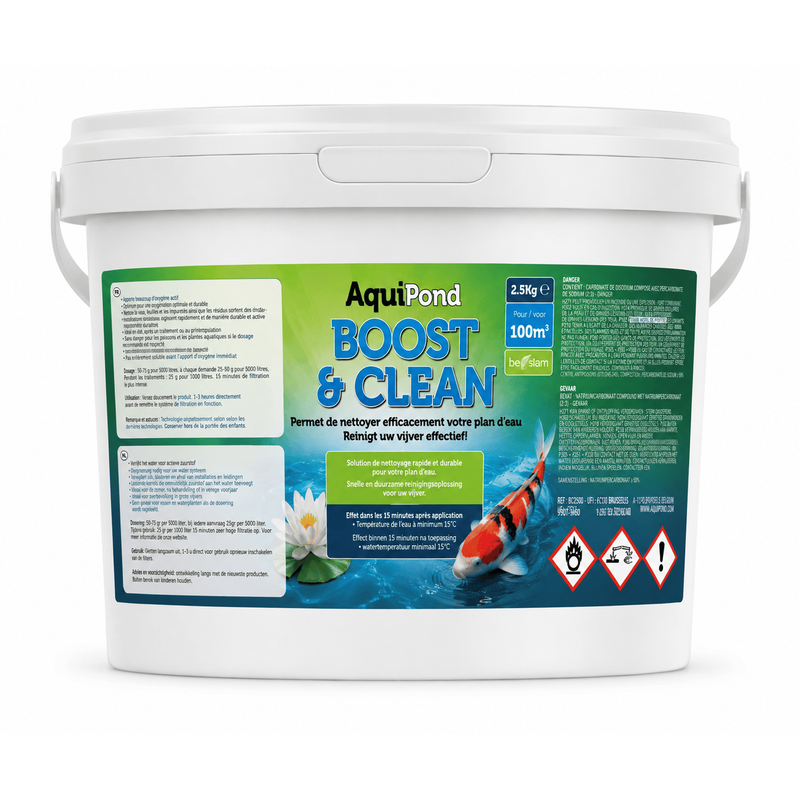
Aquipond Boost & Clean
To help loosen organic deposits on the bottom, stones, walls, and lagoon areas.
VIEW BOOST & CLEAN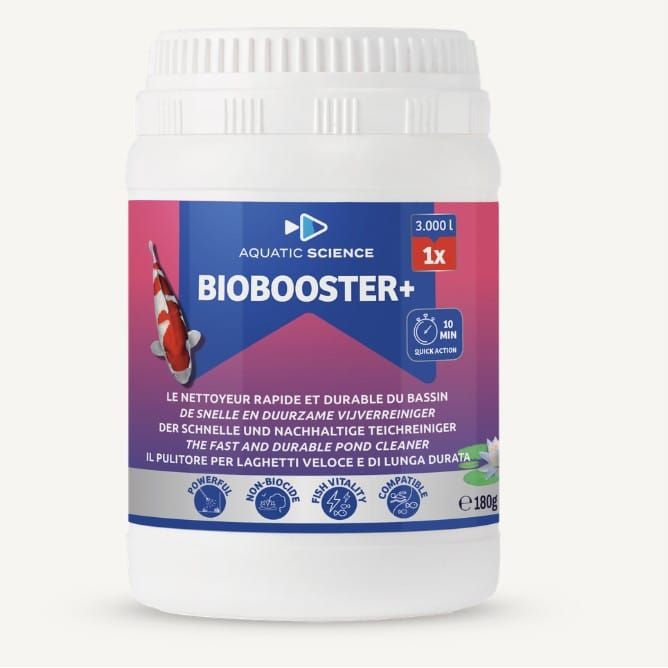
Biobooster+
An alternative for addressing filamentous algae, light sludge, and organic waste.
VIEW BIOBOOSTER+— Maintain balance with bacteria
After deposits are removed, maintenance bacteria help digest residual organic matter. They extend maintenance without replacing filtration and aeration.
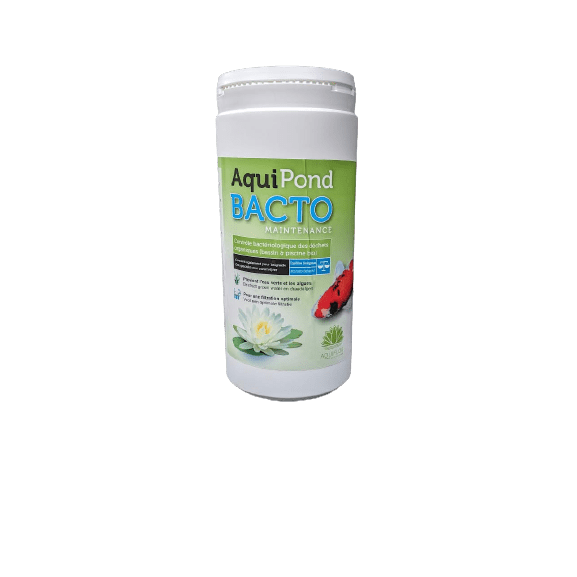
Aquipond Bacto Maintenance
To support bacterial activity after a pond or lagoon cleaning phase.
VIEW BACTO MAINTENANCE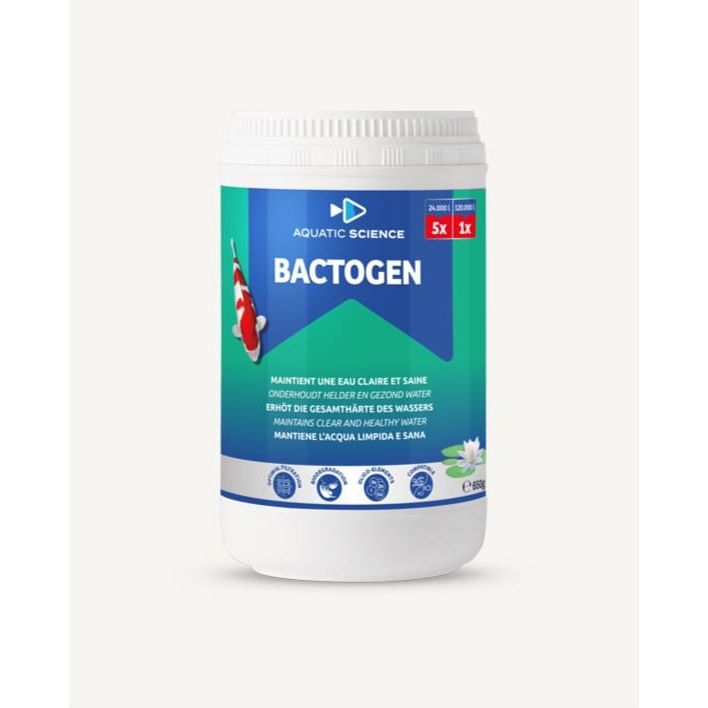
Bactogen
An alternative combining bacteria, enzymes, minerals, and trace elements for biological maintenance.
VIEW BACTOGEN| Observed element | Healthy biofilm | Saturated biofilm |
|---|---|---|
| Appearance | Thin, discreet, slightly slippery | Thick, dark, slimy, or heavily laden |
| Odor | Absent or neutral | Unusual odor in certain areas |
| Filtration | Regular operation | Accelerated buildup |
| Action | Observation and routine maintenance | Reduce waste, improve circulation, and clean selectively |
Conclusion
Biofilm is natural and useful in a living pond. It becomes concerning when it retains too much organic matter, encourages low-oxygen areas, or is part of general buildup.
The right approach is to observe, analyze, limit waste, improve circulation, clean saturated areas, and then support the bacteria. Aquipond Boost & Clean is a targeted cleaning solution, not a product for sterilizing surfaces.
Leave a comment