


The Foudebassin.com team
Published
8 min read
Scuds and shrimp: the tiny scavengers that clean the bottom of your pond for free
Turn over a handful of dead leaves at the bottom of a natural pond, and you may see small grey creatures scurry away. These are two freshwater crustaceans, inconspicuous but essential: scuds and aselles. They do some of the bottom cleaning for free. This discreet work does not replace maintenance, but it helps break down dead leaves before they accumulate.
The essentials
- Scuds and aselles do some of the bottom cleaning for free: they fragment dead leaves, which bacteria and fungi finish breaking down.
- The scud, or freshwater shrimp, swims on its side; the aselle, an aquatic cousin of the woodlouse, walks on the bottom.
- They do not parasitize fish, unlike the argulus, the fish louse.
- Their presence provides information about your water, without replacing a test.
- Do not transport scuds caught in rivers or canals: an invasive species is spreading there.
2bottom-cleaning crustaceans
3 cmmaximum size of the killer scud
1997arrival of the killer scud in Belgium and France
3creatures not to be confused
The scud, the freshwater shrimp
The scud measures one to two centimetres. Its body is arched, flattened on the sides, and it swims lying on its side in small jerks. It is often called a "freshwater shrimp". The river scud (Gammarus pulex) likes cool, well-oxygenated waters: in ponds, it is found mainly where a stream or spring flows in, and it rarely thrives in an ordinary garden pond (Freshwater Habitats Trust).
The same source states that in the United Kingdom, the "shrimp" most often seen in garden ponds is a small American species introduced last century, Crangonyx pseudogracilis, which does not appear to have caused any notable damage. Without a magnifying glass, the difference is not obvious.
The aselle, the aquatic woodlouse
The aselle (Asellus aquaticus) resembles a garden woodlouse, flatter and more elongated. It walks on the bottom rather than swimming, and lives among decomposing leaves and sludge. More tolerant than the scud, it withstands waters loaded with organic matter: the British Myriapod and Isopod Group reports it in all kinds of waters, from small garden ponds to canals, and describes it as tolerant of waters polluted by organic matter.
Scud, aselle or argulus?
| Criterion | Scud | Aselle | Argulus |
|---|---|---|---|
| Shape | Arched, flattened on the sides | Flattened, like a woodlouse | Oval, flattened top to bottom |
| Movement | Swims on its side | Walks on the bottom | Swims, then attaches itself to a fish |
| Food | Leaves, debris, small larvae | Decomposing leaves, debris | Fish blood |
| For your fish | A prey | A prey | A parasite |
According to the Freshwater Habitats Trust, Kelly et al. (2002), the BMIG and the University of Florida.
Valuable decomposers
Scuds and aselles feed on dead leaves, plant debris and the film of microorganisms covering them. Scuds are classified among the leaf "shredders", but a study by Queen's University Belfast showed that they also hunt small prey, such as mayfly larvae, and that they shred fewer leaves when these prey are abundant (Kelly et al., Hydrobiologia, 2002). By fragmenting the leaves, they leave bacteria and fungi with smaller pieces to break down. To go further: what happens at the bottom of a pond?
A first-choice live food
For fish, they are appreciated live prey. Dried scuds are also a classic ingredient in fish and turtle food. According to our experience, in a pond heavily populated with goldfish or koi, they are almost no longer found by turning over the leaves at the bottom; in a pond or pond with few fish, they thrive.
What they say about your water
- Many scuds: fairly cool and oxygenated water, but no guarantee of quality, because freshwater shrimp tolerate pollutants well (Freshwater Habitats Trust).
- Aselles without scuds: a common situation in garden ponds, where the river scud rarely lives. Only very abundant aselles on a thick layer of sludge invite you to check aeration and sludge accumulation.
To decide, nothing replaces a test: see how to perform a water test of your pond or pool.
How to encourage scuds and aselles
- Leave a few dead leaves in a corner of the pond or a lagoon.
- Keep submerged plants and stones at the bottom.
- Avoid chemical treatments and complete draining.
- A waterfall or stream offers them an oxygen-rich refuge.
However, beware of the opposite excess: a thick carpet of rotting leaves consumes oxygen. Our article on dead leaves in the pond explains how to find the right balance.
 Hiblow Baby air pump kit (0 to 5 m³)To oxygenate the bottom of a small pond without a waterfall, where aselles and scuds live.View product
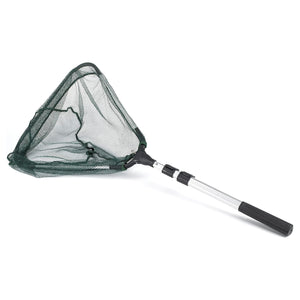
 Fine mesh net 140 cm – OaseTo remove excess leaves on the surface and observe, for a moment, the small fauna at the bottom.View product
Beware of the killer scud
Do not move scuds caught in rivers or canals. The killer scud (Dikerogammarus villosus), originating from the Black Sea and Caspian Sea region, was first observed in Belgium and France in 1997. Larger than our scuds (up to 3 cm), it is associated with the strong decline, or even local disappearance, of the native scud Gammarus pulex, according to the Flemish Institute for the Sea (VLIZ). Among the routes of dispersal, the same source cites boat hulls, ballast waters, releases and fish movements; in the United Kingdom, fishermen and boating enthusiasts are asked to clean their equipment and not move bait or water from one site to another.
Concretely:
- only introduce scuds or aselles from your own pond or a friend's pond, never from a river, canal or protected site;
- rinse and let dry nets, boots and buckets that have been used elsewhere before plunging them into your pond;
- never empty the water from a bucket of bait or an aquarium into a pond or into nature.
Before putting plants from another garden into the pond, rinse them in a basin filled with water from their original pond and watch what comes off: you will know exactly which small animals you are introducing.
A pond bottom lacking life or oxygen?
We help you choose aeration suited to its volume.
Frequently asked questions
Are they parasites?
No. They do not attack fish. Do not confuse them with the argulus, a flat and oval fish louse, visible to the naked eye, which attaches itself to the skin, gills or mouth of fish (University of Florida).
Can they be introduced?
Most often, it is not necessary: these crustaceans do not fly, they slowly colonize new bodies of water and sometimes arrive transported by birds, according to the Freshwater Habitats Trust. If you introduce them, only take them from your own home or a friend's pond, never from a river, canal or protected site.
Why are there no scuds in my pond?
The river scud prefers cool, flowing water, and these crustaceans slowly colonize new bodies of water, because they do not fly. A recent pond or one without water inflow may be devoid of them.
Are aselles a sign of polluted water?
Not necessarily. The aselle also lives in good quality waters; it simply tolerates organic matter better. Only a test truly says where your water stands.
Should dead leaves be removed for scuds?
You should leave some, not all. A few leaves feed scuds and aselles; a thick rotting carpet consumes the oxygen at the bottom.
And you?
Have you already observed these small crustaceans in your pond? Share this article with those who think that the bottom of a pond is "dirty".
Also read: Raising Daphnia, The self-sustaining natural pond and The wildlife that settles in the pond.
Produits et rayons conseillés

Products recommended by our experts
See the full selection Aquipond Bactovase Liquide 1 L or 5 L - Anti-sludge bacteria for ponds
À partir de €39,00
View product
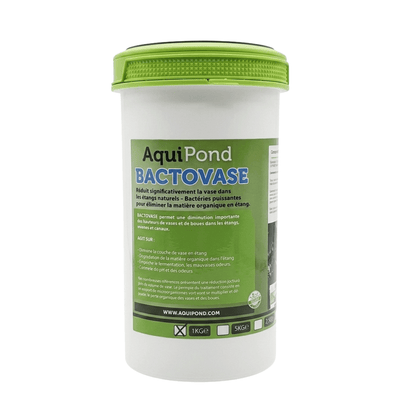 Aquipond Bactovase 1 kg – Bacteria for pond sludge reduction (5 to 10 m²)
€39,95
View product
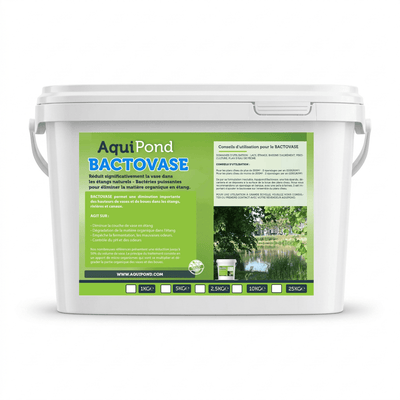 Aquipond Bactovase 2.5 kg – Bacteria to reduce pond sludge (12.5 to 25 m²)
€89,95
View product
 Aquipond Bactovase 5 kg – Bacteria to reduce pond sludge (25 to 50 m²)
€151,00
View product
Read also
All our tips Wasps and bees drinking from the pond: should we worry or rejoice?
Updated November 24, 20266 min read
 No more slugs in the garden? How a pond attracts toads and frogs, their natural predators
Updated November 24, 20267 min read
 Does a pond attract rats? The real causes and how to prevent them
Updated November 24, 20267 min read
Leave a comment